Air conditioners or industrial air coolers? Despite their common cooling function, they differ on ecological and economic grounds. An air conditioner uses a toxic refrigerant; an air cooler, water! An air conditioner operates in a closed room; an air cooler, in a ventilated space! Yet, an air cooler consumes less energy than an air conditioner. Hence the lower cooling cost of an air cooler compared to an air conditioner! Compare air conditioners and air coolers in a few minutes.
Sommaire
- Coolers vs. air conditioners: comparing air conditioning functions
- A cooler consumes 5 times less energy than an air conditioner
- Intense heat boosts the energy efficiency of a cooler, reduces that of an air conditioner
- A cooler is suitable for very large premises, an air conditioner for controlled atmospheres.
- A cooler is easier to install than an air conditioner
- A cooler takes less time to maintain than an air conditioner
- A cooler is better for your health than an air conditioner
- A cooler has less impact on the environment than an air conditioner
- Coolers are more cost-effective
Coolers vs. air conditioners: comparing air conditioning functions
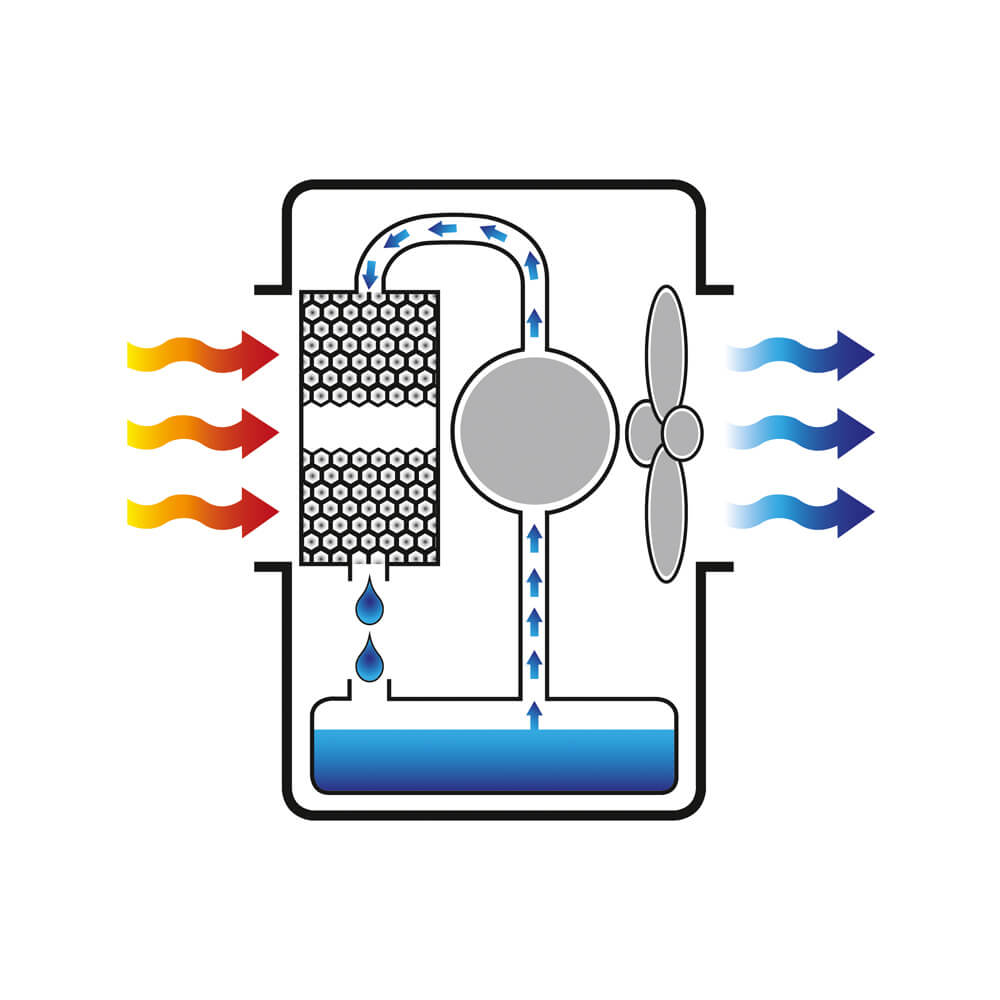
The evaporative energy of water produces cooling by an air cooler. The heat extracted from the air generates the evaporative energy. The device’s fan pushes air over the water-impregnated humidifier. The humidifier facilitates water-heat contact, stimulating evaporation and thus cooling. The fan also directs the discharge of humid air.
An air conditioner includes a cooling circuit. This circuit contains a refrigerant that transports heat from the indoor unit to the outdoor unit of the device (split system). The internal unit of the air conditioner extracts heat from the air in a room, reinjecting it cooled for air conditioning. The unit’s fan blows heat over the circuit, leading to: the heating and evaporation of the refrigerant, and the transfer of heat to the external unit of the device. In this unit, a fan forces the evacuation of heat into the environment, lowering the temperature of the refrigerant, which condenses and returns to the air conditioner’s internal unit.
The evaporative cooling function of the air cooler requires continuous evacuation of ambient air, which is essential for cooling efficiency. Thus, an air cooler can cool a terrace or a room indiscriminately.
The air conditioner’s cooling function prohibits the evacuation of air from a room. Opening the room would compromise the device’s efficiency. Cooling a terrace with an air conditioner would be an energy absurdity.
A cooler consumes 5 times less energy than an air conditioner
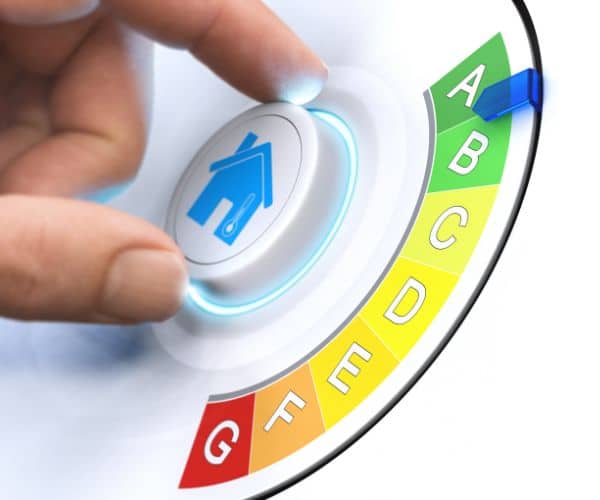
The evaporative energy of water generates most of the cooling energy of an adiabatic air cooler. Electrical energy powers the cooler mainly for one mechanical part: the fan. The pump, which transports water from the reservoir to the humidifier, requires little electricity. Hence the high energy efficiency of an air cooler.
Electricity produces the cooling energy of the air conditioner. Every part of the device that transfers heat uses electricity: fans, compressor, etc. This air conditioning system involves more than one component in each unit. Therefore, the energy demand of air conditioners is 5 times that of air coolers.
Intense heat boosts the energy efficiency of a cooler, reduces that of an air conditioner
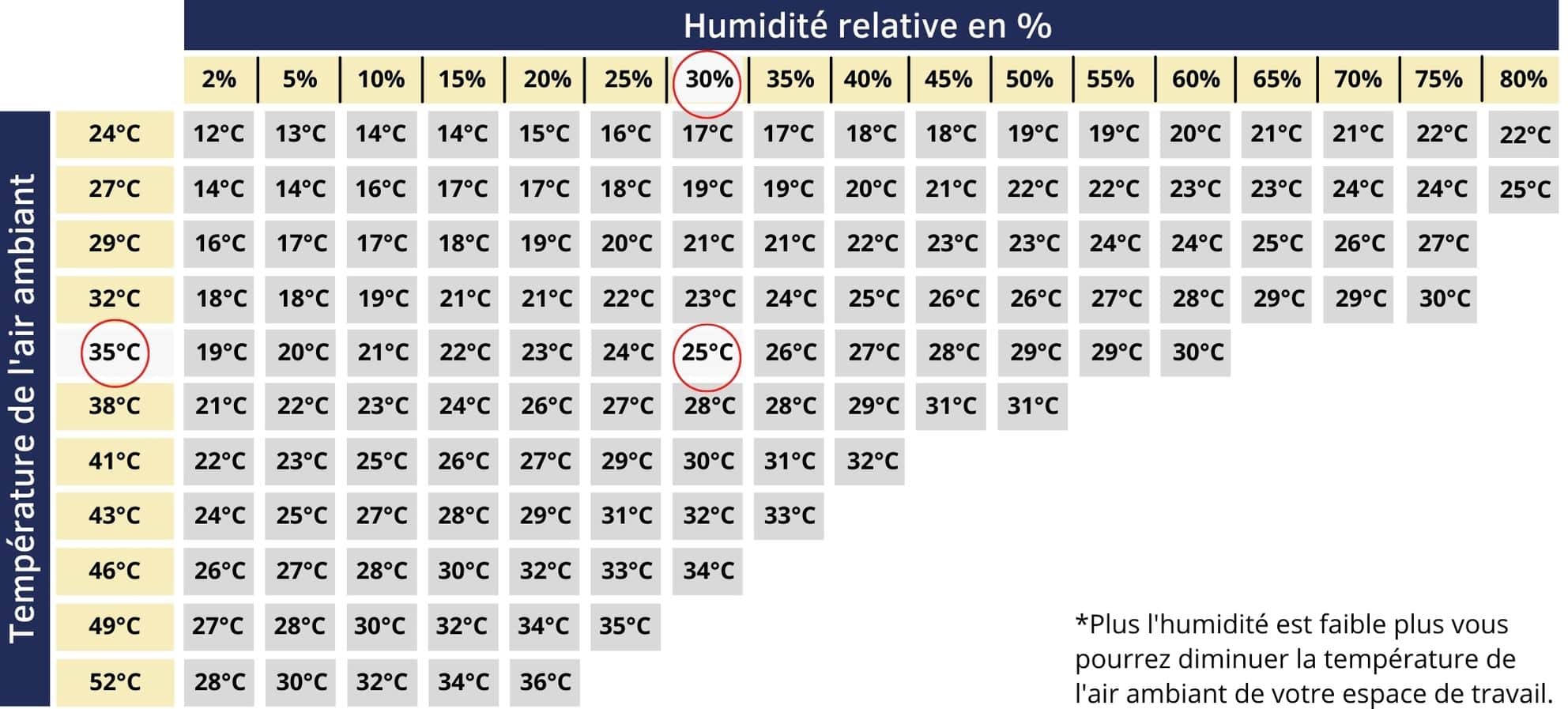
In ordinary summer temperatures, the energy efficiency of coolers exceeds that of air conditioners.
During extreme heatwaves, the efficiency of the air cooler intensifies. The air then contains a heat reserve that accelerates evaporation and produces the device’s cooling energy. The generated evaporative energy increases faster than the electricity supplied to the cooler, depending on the fan speeds.
During a heatwave, the energy efficiency of the air conditioner decreases. As the temperature rises, each part of the air conditioner absorbs more electricity without proportionally increasing the cooling effect.
A cooler is suitable for very large premises, an air conditioner for controlled atmospheres.
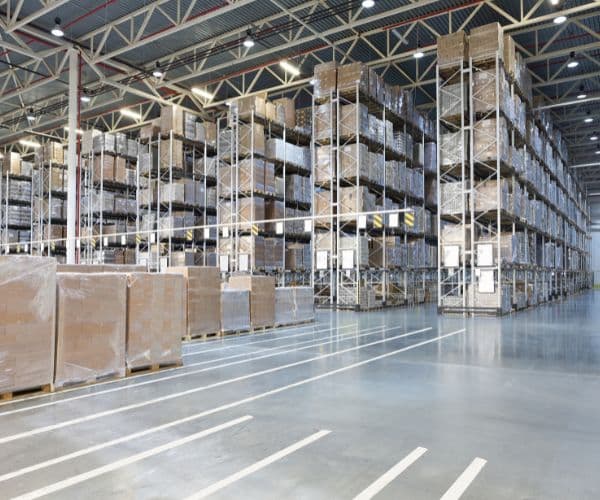
An air cooler lowers the temperature of a large, ventilated, non-insulated space. With these parameters, during a heatwave, mobile or fixed air coolers reduce the temperature to a level unattainable by air conditioners.
Ventilation breaks the energy efficiency of an air conditioner. The device requires an isolated, closed room for effective air conditioning.
The natural cooling function of air coolers provides a temperature accurate to the degree. Air coolers perform well for most cooling needs.
Air conditioners ensure a fixed temperature; their cooling function is artificial. If temperature invariability necessitates the purchase of an air conditioning unit, an air conditioner will be required.
A cooler is easier to install than an air conditioner
The installation of an internal unit and an external unit through which a chemical circulates complicates the installation of air conditioners.
Monobloc, air coolers are easily installed on rooftops. A mobile air cooler is even easier to install! Fill the water tank, plug in the device.
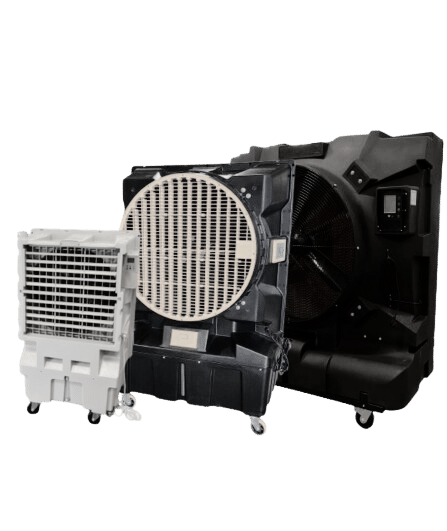
IC range
A cooler takes less time to maintain than an air conditioner
Cooler maintenance includes cleaning:
- Periodic: air filter, tank
- Annual: humidifier, fan.
Air conditioner maintenance involves :
- regular cleaning: filters on each unit, external fan
- annual inspection of cooling system components by a professional certified to handle refrigerant.
A cooler is better for your health than an air conditioner
The evaporation of water from the air cooler increases the humidity of a room by 5%. This is a natural humidity variation for humans.
An air conditioner cools a room by jointly evacuating heat and humidity. Below 40% humidity, the room becomes unhealthy; dehydration, headaches appear…
The evaporation of water by the cooler propagates a temperature in the room that is balanced with the external heat.
Air conditioners set an artificial temperature degree. An excessive difference with the outside will cause thermal shock.
An air cooler constantly renews the atmosphere of the room. The device regenerates air quality through continuous evacuation of pathogens.
An air conditioner continuously recycles the air in the room. The device promotes respiratory ailments if filter maintenance is superficial.
Air coolers are quieter devices than air conditioners. The sound level of an air cooler is 66dB, that of an air conditioner is 76dB. A 10dB amplification gives the sensation of a sound twice as loud.
A cooler has less impact on the environment than an air conditioner
All energy used impacts the planet. An air cooler consumes less than an air conditioner:
- energy consumption of the cooler for the fan and pump.
- air conditioner energy consumption from compressor, fans, etc.
An air cooler releases fresh air into the environment. The device reduces heat around the building. An air conditioner expels hot air, contributing to the heat island effect (heating of the building’s environment).
An air cooler uses water as a product to cool a room. An air conditioner uses a chemical refrigerant that contributes to global warming. The device inevitably diffuses it: no cooling circuit is 100% sealed.
An air cooler consumes more water than an air conditioner. Through evaporation, the cooler transforms water into cooling humidity. The expelled humidity rejoins the natural water cycle. Air conditioners extract humidity from the air.
Coolers are more cost-effective
For an equivalent air-conditioning objective, the purchase price of an air conditioner is higher than that of a cooler, and so is the cost of installation.
A cooler requires less energy to operate, and less time and skill to maintain, resulting in annual costs ten times lower than those of an air conditioner.
To discover the different models of OBERA evaporative coolers, visit our industrial air coolers page.
