To determine the suction flow rate and pressure required for an industrial suction system, you need to consider several factors specific to your application.
Sommaire
Factors for determining suction flow rate
Identify specific needs
You need to understand the details of your application, such as the type of material to be vacuumed (dust, wood chips, liquids, etc.), particle size and shape, distance between source and collection point, particle containment requirements, etc. This information will help you choose the right equipment.
Calculate the required suction flow
The suction rate will depend on the quantity of material to be vacuumed per unit of time. You need to estimate the amount of material to be collected, usually expressed in kilograms per hour (kg/h) or cubic meters per hour (m³/h). If you have several emission sources, you need to add up the individual flow rates to obtain the total flow required.
To calculate thesuction powerrequired for an air handling system, it is necessary to take into account several factors such as :
REQUIRED AIR FLOW
This is the volume of air you wish to extract and treat in your system. This will depend on factors such as the size of the room or space to be treated, the capture speeds selected, the type of activity taking place there, and your specific air renewal requirements. Air flow is generally expressed in cubic meters per hour (m³/h).
PRESSURE LOSSES
This is the sum of the pressure losses generated by the resistance of your network and the equipment that makes up your installation (collection devices, piping network, dust collector, chimney). The technical specifications of the various components of your air handling system will provide information on the associated pressure drops.
THE SAFETY FACTOR
It is advisable toadd a safety factor to the calculated suction flow to allow for load variations, inaccuracies in estimates or possible future needs. This safety factor may vary according to the specific requirements of your installation, but a common value is usually in the order of 10 to 20%.
The suction power is proportional to the flow rate multiplied by the suction pressure (pressure drop) divided by the fan efficiency.
Select the appropriate fan
The fan is the key component for generating the required suction flow and pressure. There are different types of industrial fan, such as centrifugal and axial fans. Consult the manufacturer’s specifications to choose the right fan for your intake flow and pressure requirements. Fan performance curves show the relationship between air flow and pressure, enabling you to select the appropriate model.
Consult a professional or a specialized supplier
If you’re not sure about the calculations, or if you have complex specific requirements, it’s advisable to call in a professional industrial vacuum system engineer. These experts can help you design and correctly size your system according to your specific needs.
It’s important to note that the design and installation of an industrial vacuum system can be complex. It is therefore essential to take all relevant variables into account, and to consult experts to ensure optimum, safe operation of your vacuum system.
The benefits of optimized airflow for your extraction system
Optimizing air flow in an industrial air handling system offers several important advantages. Optimized air flow ensures adequate filtration. When air flow is insufficient, particles can bypass the filters and be released into the treated air. Optimum airflow, on the other hand, ensures that all unwanted particles are effectively captured by the filters, improving air quality in the working environment.
What’s more, in some work environments, there may be potentially hazardous contaminants, such as toxic gases, harmful chemicals or biological agents. The suction flow in the dust collector therefore captures these contaminants and removes them from the air stream, reducing the risk of worker exposure to harmful substances.
Optimized air flow also helps maintain the overall performance of the air handling system. Equipment such as fans, heat exchangers, chillers, etc., are designed to operate efficiently with a specific airflow rate. By respecting this flow rate, you ensure that this equipment operates correctly and delivers the expected performance.
Another advantage is that optimum air flow reduces the energy consumption of the air handling system. When the airflow rate is too high in relation to actual requirements, fans consume more energy than they need to. By adjusting the airflow rate to an optimum level, you can reduce energy consumption, which translates into savings on operating costs.
Not to be underestimated, adequate airflow also contributes to worker comfort. In industrial environments, proper air circulation is essential to remove pollutants, maintain comfortable thermal conditions and reduce humidity levels. Optimized airflow ensures a healthy, comfortable working environment for employees.
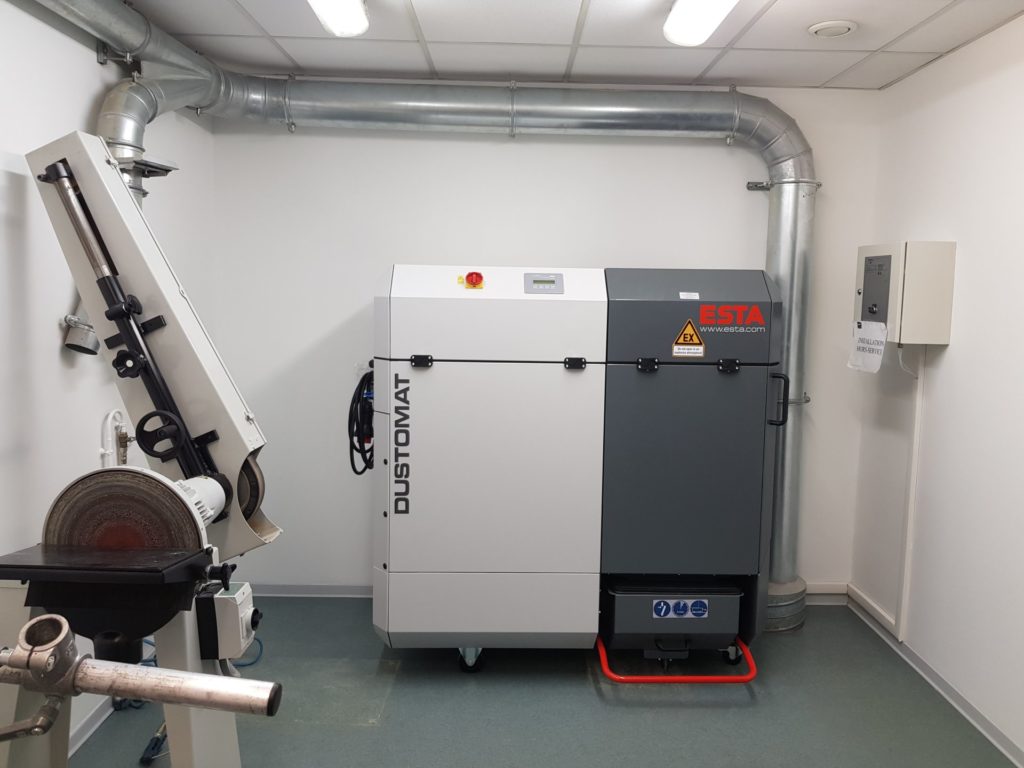
And last but not least, optimum air flow also helps to extend the life of the air handling system’s equipment . When airflow is incorrectly dimensioned, system components can be subjected to overload or inappropriate operating conditions, leading to premature wear or failure. By optimizing air flow, you reduce stress on equipment and improve its durability.
Compliance with air quality regulations and safety standards
Airflow can help companies meet air quality regulations and safety standards in a number of ways.
Compliance with environmental regulations
Many government regulations and industry standards set strict limits on the levels of particles and contaminants permitted in ambient air. Dust collectors with the right suction rate can capture and retain harmful particles, helping companies to comply with these regulations and avoid penalties or sanctions.
Fire and explosion prevention
Certain materials, such as combustible dust, can present a fire or explosion hazard if they accumulate in the air. Appropriate suction flow in a dust collector collects and retains these combustible materials, reducing the risk of fire and flame propagation.
Enhanced corporate reputation
Companies that demonstrate their commitment to environmental protection and worker health by implementing effective dust collection systems are often viewed positively by stakeholders. This can enhance the company’s reputation, improve relations with customers, employees and regulators, and create a competitive advantage.
By using theright suction flow ratein a dust collector, companies can not only improve air quality in their working environment, but also comply with current regulations and safety standards. This contributes to a healthier, safer and more environmentally-friendly working environment.
