Sommaire
Case study
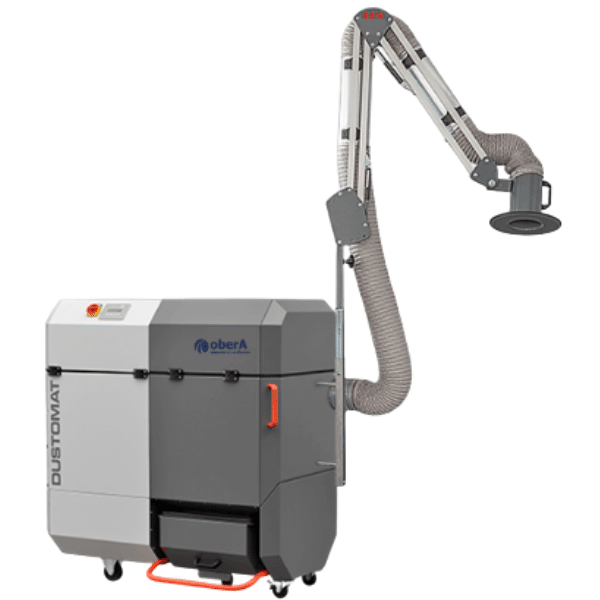
Obera installed a 3000 m³/h Dustomat 4-24 ATEX dust collector at a healthcare establishment. The aim is to deal with the explosive and dangerous CMR-containing dusts produced during prosthesis manufacture. These pollutants come from the plaster used in the podiatry bench, drum milling machine and belt sander. We have also installed an ePur10CA to treat odors and solvents generated during the manufacture of resin prostheses.
CMR treatment in healthcare facilities
Exposure to CMR agents is ubiquitous in the workplace. Dusts, solvents, reagents and dyes are hazards for operators. In this case study, plaster dust is presented, a CRM that appears harmless but quite dangerous to health.
What are CMRs?
Some CRM agents are considered carcinogenic, mutagenic or toxic in the medium and long term. Exposure to these agents has major health repercussions, which is why it’s so important to remove them from the workplace. CMRs are classified into three categories:
- Carcinogenic agent/process: substance, chemical, preparation or process capable of causing cancer or increasing its incidence.
- Mutagen: chemicals or processes that increase the frequency of cell mutations and produce hereditary genetic defects.
- Toxic agents: chemicals or processes that have an adverse effect on the fertility of women and men.
In addition, there are two modes of contamination:
- By inhalation: penetration of the respiratory tract
- Dermal: penetration through the skin (hands, face, eyes, neck, arms).
Practical case of plaster dust
How is plaster made?
Gypsum is commonly used in a variety of industrial sectors, notably in the manufacture of plasters, sealants or screeds, molds and molding materials, or insulating structures with gypsum walls, partitions, walls, etc. But plaster also has its uses in the medical sector, such as in the maintenance casting of fractured bones, surgical plaster, the consolidation of bandages, the manufacture of prostheses and so on.
Gypsum is a powdery mixture created by calcining and grinding gypsum. Gypsum is a sedimentary rock, formerly known as “plaster stone” or “pierre de plâtrières”. Gypsum is largely extracted from underground mines or quarries before being fired, crushed and finally ground, producing the white powder that can be seen when handling or cutting plaster.
How dangerous is plaster (or gypsum)?
Gypsum is a mineral dust and therefore harmful if inhaled. These mineral dusts cause damage to the respiratory tract and, if ingested in excessive quantities, can find their way directly into the nose, leading to allergic rhinitis or inflammation of the nasal mucosa. The finest of these are able to pass through the nasal cavity, and can even irritate the mucous membranes of the trachea and bronchi, attacking the trachea and lungs directly. Constant inhalation of gypsum mineral dust can lead to chronic lung disease and asthma.
The suspension of plaster dust is also a determining factor in the risk of explosion. Gypsum dust is considered explosive in contact with a flammable source.
What are the protective measures?
Vacuum/capture dust directly at source
There are a number of industrial vacuum cleaners on the market, designed to extract dust that is hazardous to operators. Some industrial vacuum cleaners also comply with the ATEX standard to avoid the risk of explosion.
Avoid air circulation or draughts
It is advisable to work in an enclosed workspace to avoid moving dust in and out of the room. This prevents dust from being scattered and ensures repeated contact with the dust.
Clean workstations regularly
Cleaning workstations is essential to keep the space as healthy and clean as possible for staff.
