We’re often asked this question. First of all, we need to know exactly what the on-site work process looks like. What is the quantity and nature of the dust produced? How long do you work during the day? How can dust, smoke and shavings be effectively captured? These are the basic questions that generally enable us to answer the customer’s specific needs and recommend the most appropriate mobile or fixed vacuum system.
Sommaire
The difference between dust collectors and mobile extraction units or centralized extraction systems
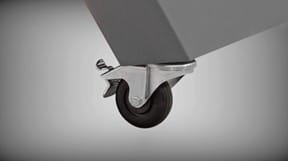
The main difference lies in the application possibilities. Mobile dust collectors or suction boxes can be used flexibly in almost any application. Their castors make them easy to maneuver. They are designed to meet specific requirements. Centralized dedusting and filtration systems are not versatile, and can only be used for one application at a time. Depending on the application, you’ll need a different stationary vacuum cleaner.
Dust collectors or mobile extraction units
When to use these machines on wheels?
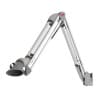
Mobile dust extraction systems are generally positioned alongside machines, production equipment or in production halls. Various collection elements, such as suction arms, hoods, backsplashes, suction walls or suction tables can be connected.
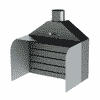
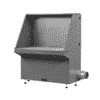
Mobile dust collectors are generally less expensive than centralized vacuum systems, and are recommended when suction points change frequently. Thanks to easy-to-maneuver castors, mobile dust collectors can be used flexibly and moved easily to the point of use. In modern factories, automated production lines are often modified to accommodate new manufacturing processes. A mobile dust collector adapted to the means of production offers great flexibility, as it can easily follow changes in layout. A centralized installation with its piping network and fixed collection points requires the network to be resized whenever machine layouts change.
But here too, there are differences that need to be taken into account. Do you want to have a certain freedom of movement, or does the treatment process allow for a centralized solution? The mobile dust collectors in the Dustomat range, for example, can be used continuously. Various filter types (saturation filters or regenerative filter media) and a fully automatic Jet-Pulse cleaning system guarantee efficient dust extraction. Even hazardous and/or carcinogenic dusts (such as stainless steel dust, silica, composite fibers) can be captured by approved vacuum cleaners (class H or W3). Mobile dust collectors generally have high suction power and a large filter surface. This combination combines mobility and high performance in a small footprint. Special versions such as ATEX, class H, W3, frequency variation, version 4.0, etc. are possible for mobile vacuum cleaners and have become standard at OberA. Thanks to constant development, our mobile dust collectors are always at the cutting edge of technology.
Area of use
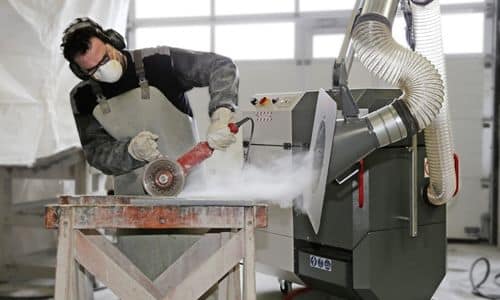
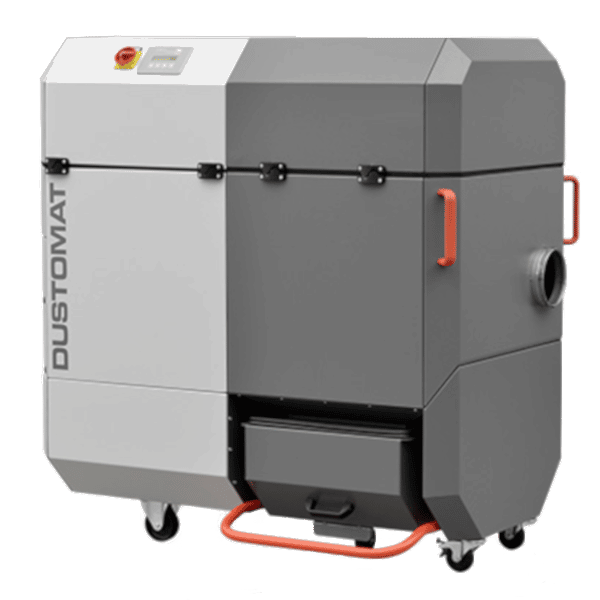
Dustomat 4.24 : The double-stage Class H filtration (HEPA H14), small footprint and low noise level enable it to be installed directly in the work area.
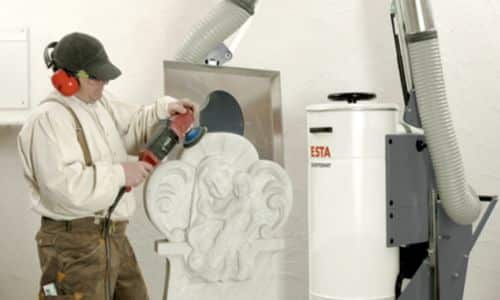
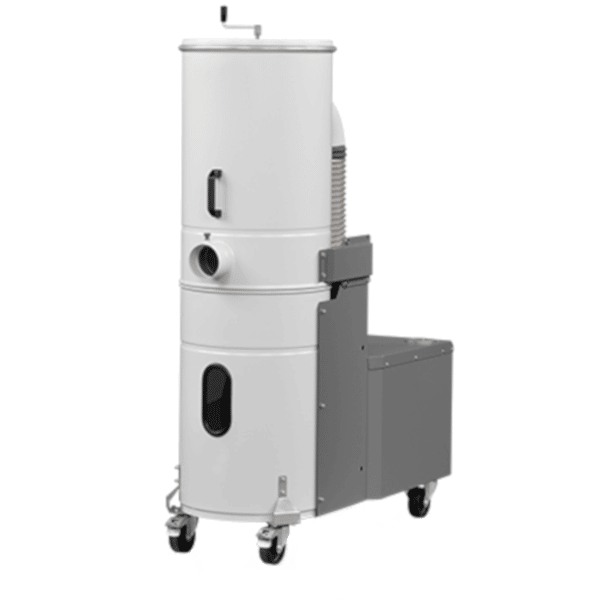
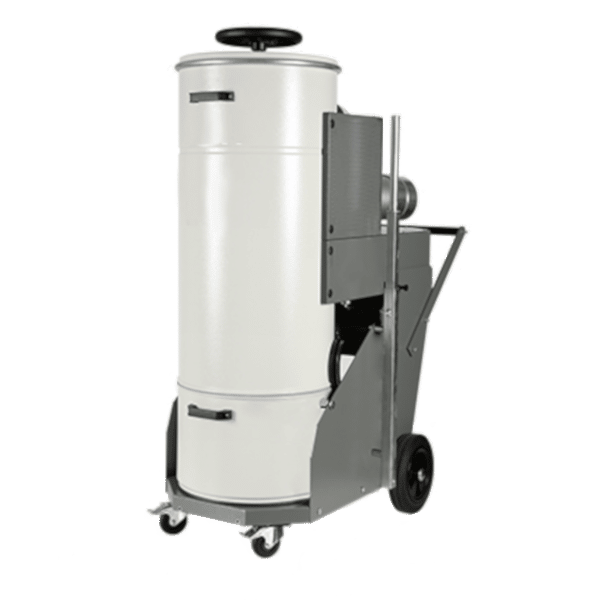
Dustomat-16: Class H mobile vacuum cleaner for direct extraction of fine stone dust.
OberA suction system
Centralized stationary vacuum system
When should I install a small centralized dust collector?
Stationary/centralized dust collectors are particularly suitable for small spaces and for extracting dust from small processing machines (e.g. benches, belt sanders or deburring machines) with a maximum DN 150 mm suction connection. In these cases, the suction rates required are generally low. Sporadic work of this kind with a stationary extraction unit produces little dust. This is why stationary vacuum systems are predestined for this application.
Regenerating filter cartridges are not used, but bag filters or compact saturation filters, which are replaced when saturated. Spark protection measures are also available. However, stationary extraction units cannot be used for stainless steel or aluminum dust.
Area of use
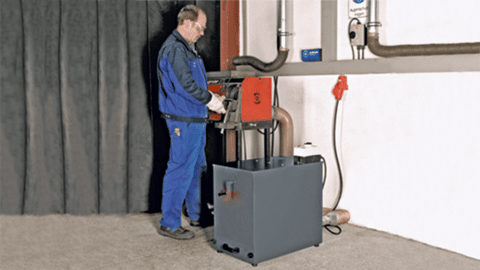
Stationary suction system from OberA
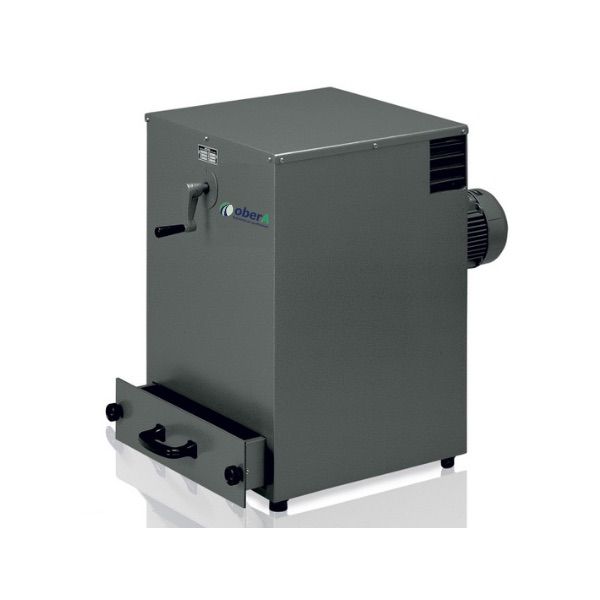
OberA extraction systems
OberA mobile and stationary dust collectors are real all-rounders. They guarantee clean, dust-free air at every workstation. All types of dust, chips and fibres generated during the machining process are extracted directly at source.
All dust collectors have one thing in common: whether you’re using a mobile or stationary extraction system, they’re always easy to maintain, and thanks to their compact design, they can be used flexibly and in a variety of ways.
This way, you can concentrate on the job in hand – and not on dusting.
