Sommaire
How is an extraction system structured, and which one is suitable for my application?
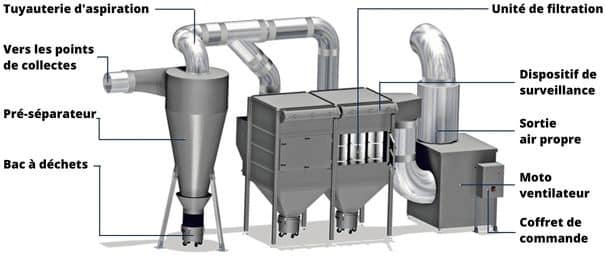
By extraction systems, we mean systems that remove nuisance harmful substances from the air. Different extraction systems are required depending on the application. In addition to mobile and fixed dust collectors for many types of dust, there are, for example, welding fume filters, oil mist separators, and chip separators.
All extraction systems, however, have one thing in common: they generally share the same structure. To learn more about the detailed structure and operation of an extraction system, see below.
Construction of an Extraction System
Emission Capture Device
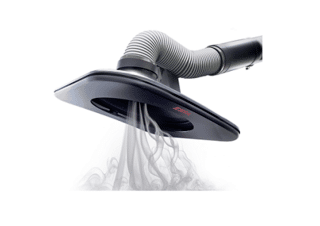
To effectively filter the air, the emissions to be filtered must be optimally and efficiently captured. Extraction arms, hoods, or funnels, for example, are suitable for this purpose.
Ducting and Extraction Manifold

The various extraction points are connected to the extraction system by ducting systems or extraction pipes (spiral duct or smooth electro-galvanized or painted steel pipe).
Pre-separators
Pre-separators can be integrated into the extraction system in various ways. They can be used, in particular, in processes involving large quantities of dust or chips to relieve the filtration unit or as an additional safety device (e.g., in case of sparks). Examples of pre-separators include impact separators, deflectors, cyclone separators, spark pre-separators, and horizontal separators.
Filtration Unit
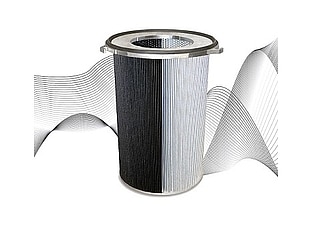
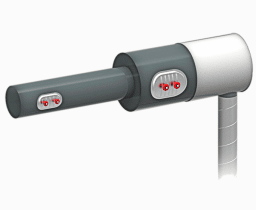
This is where the filtration of the extracted fluid takes place. Filtration can be performed by a wide variety of filtration systems and filter media, for example, dry separators with filter cartridges, pocket filters, bag filters, etc., or wet separators using water as a dust binder.
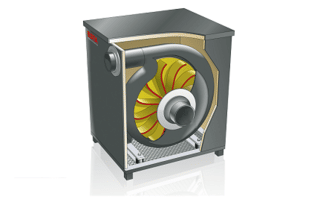
FAN
The fan generates the airflow and negative pressure required for fluid extraction. It is designed according to the required operating point (flow rate in m³/h and pressure in Pa or mmCE). Other vacuum generators (generally for high pressure) include side channel compressors, radial blowers, and rotary piston blowers.
Control Cabinet
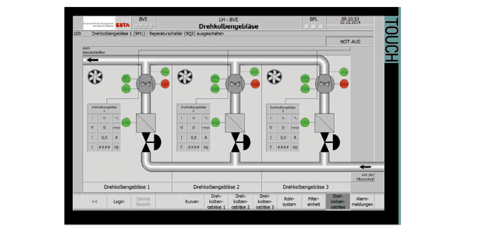
The control’s role is to operate the motor, monitor the system, issue signaling reports, and regulate power.
The Right Extraction System for Every Application
To find the ideal extraction system for each application, certain questions must be clarified beforehand.
Depending on the process, the pollutant, and the material, the possibilities for achieving optimal extraction results differ.
Below is an overview of all possible factors to consider when choosing the appropriate extraction system.
Factors for Designing an Extraction System
1. What process does the extraction involve?
- Sawing, Separating, and Cutting
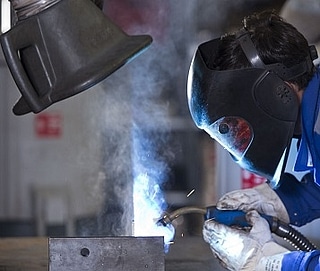
- Welding and Brazing
- Grinding and Polishing
- Machining & Milling
- Decanting, Bottling, and Mixing
- Vacuuming and Cleaning
- More Processes
2. What emission is being extracted?
- Dust
- Welding Fumes and Solder Fumes
- Oil and Emulsion Mist
- Pollutants Chips Wood
- Vapors and Odors
- Fibers
- More Emulsions


3. What material is being extracted?
- Mild Steel (Black Steel)
- Stainless Steel
- Light Metals (Aluminum, Titanium, etc.)
- Plastics
- Organic Dusts (tea, grain, flour, etc.)
- Others
4. What is the property of the medium to be extracted?
- Dry, oily
- Fluid, sticky
- Fibrous, agglomerating
- Carcinogenic
- Combustible, conductive, abrasive
- Hygroscopic
- Others
5. Does the process generate sparks?
- Sparks during welding
- Sparks during grinding
- Spark projection during sawing
- Others
6. How many points need to be extracted?
- Single Station
- Multi-station
- Hall Extraction
7. Simultaneous operation of extraction points?
- How many extraction points are in operation simultaneously and therefore need to be extracted at the same time?
8. How can pollutants be captured?
- Direct connection to the processing machine (extraction nozzle)
- Suction arm
- Extraction Hood
- Backdraft Hood
- Annular Extraction (Pouyes)
- Extraction Wall
- Extraction Booth
- Ambient Extraction
9. Where should the system be placed?
- In the hall (directly next to the extraction points)
- Outside the hall (in the open air)
- In an adjoining room
- Flexible use location (mobile extraction system)
10. How long is the extraction system used?
- 1 shift per day operation
- 2 shifts per day operation
- 3 shifts per day operation
- Continuous operation (24/7)
11. Which filtration principle is preferred?
- Dry filtration
- By a cyclone separator
- By a wet separator or scrubber
12. Is the filtered air reintroduced into the building or exhausted outside?
- Air recirculation: air is returned to the workspace
- Exhaust: air is directed outside
13. What is the quantity of dust / chips?
- 50 liters per month
- 20 liters of dust per week
- 10 liters per hour
- Is there a significant difference between average quantity and instantaneous quantity?
- Others
14. How is dust removed?
- Dust collection bin on the extraction system (e.g., 100-liter dust collection container)
- Continuous dust discharge via a rotary valve
- Others
Contact us
Do not hesitate to contact us! Our sales representatives are available to advise you individually and find an extraction solution tailored to your needs.
Our extraction systems guarantee the best possible separation performance, combined with maximum availability and minimal energy consumption. Thus, each system not only meets current requirements and guidelines but is also optimally designed for the future.
