An air purifier cleans the air in a room by filtering out particles, pollutants, viruses and bacteria. To maintain filtration quality, the air purifier needs maintenance. Replacing the main filter or fine filters is essential. But when should you change your air purifier filter? We’ll help you find out.
Sommaire
3 ways to know when to change your purifier filter
Regular replacement of air purifier filters is part of normal operation. It’s the best way to ensure that your air purifier continues to operate at the highest level of filtration. Let’s look at 3 ways to know when to change your air purifier filter.
Change the purifier filter when indicated by the unit
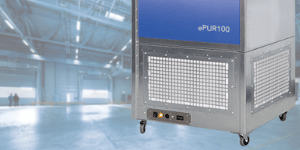
Industrial and professional air purifiers feature an indicator. Some have an air quality indicator. Others have an hour meter, or a clogging indicator. These devices let you know when to change the filter(s ) in your air purifier. They generally use a visual color indicator (red LED, for example).
Change a purifier filter on schedule
Keeping a schedule lets you know when to change the filter in your air purifier. This system is restrictive, but with a purifier that doesn’t measure clogging (filter differential pressure measurement called delta P), it’s a solution… Filters can be replaced on a scheduled basis when used in low-dust or low-pollution areas, or in anti-covid tertiary or hospital purifiers. In this case, it is generally recommended to replace the filter once a year.
When it comes to purifiers subject to heavy pollution in production areas or warehouses, it is necessary to opt for purifiers equipped with continuous fouling measurement. .
When should a carbon filter be replaced?
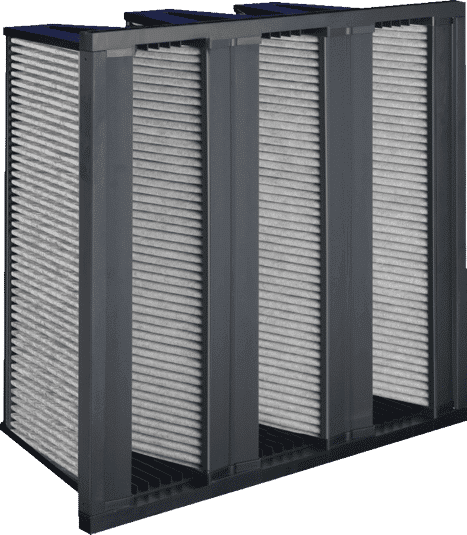
It’s very difficult to plan the replacement of an activated carbon filter. Carbon doesn’t clog up like a particulate filter, and its pressure drop doesn’t change with its saturation level. Therefore, carbon saturation is generally identified by the return of the pollutant’s odor or, when the pollutant is unique, by the measurement, on the clean air side of the purifier, of a concentration greater than a single defined one. The latter method can only be used if the pollutant is unique. In the case of a combination of VOCs, for example, it is very difficult to measure a concentration on the clean air side. It is generally recommended to replace the carbon at least once a year.
How long does an activated carbon filter last? How often should an activated carbon filter be replaced?
To estimate the service life of an activated carbon filter, you need to know the intake flow rate and the concentration of pollutants to be treated. Activated carbon has a pollutant absorption capacity corresponding to 20 to 40% of its weight. A 36kg carbon filter will have a maximum absorption capacity of 14kg of pollutants. The replacement frequency can therefore be calculated using the following formula:
- Replacement interval in h: ( Pc x Ta ) / Qp
- with Pc = activated carbon charge kg
- Ta = pollutant adsorption rate in %.
- Qp = pollutant mass flow in kg/h (air flow in m3/h x pollutant concentration kg/m3)
When should HEPA filters be changed?
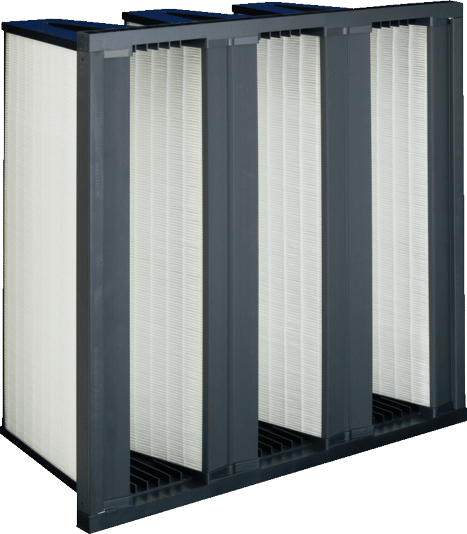
HEPA filters remove the finest particles and viruses (H13 and H14 quality filters). Regular replacement is crucial to air quality. These filters are also the most expensive. So it’s important to replace them only when necessary. Opt for purifiers equipped with a clogging indicator, so that HEPA filters can be replaced only when the level of clogging and the consequent drop in flow rate make this necessary. When it comes to filters used to treat viruses and bacteria, opt for an annual or twice-yearly replacement schedule.
When should I change my air purifier’s coarse filters or pre-filters?
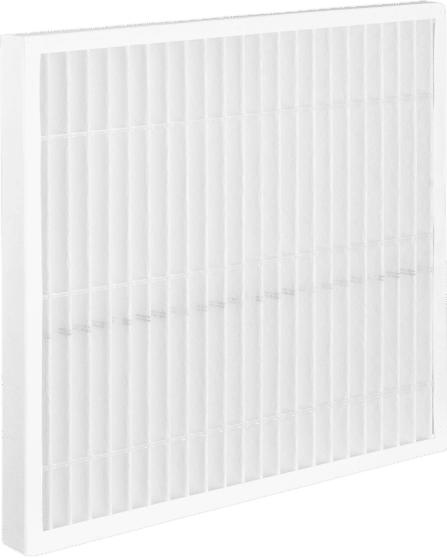
When fitted, pre-filters or coarse filters are designed to protect fine, more expensive filters such as HEPA filters. They should be replaced when the clogging indicator shows this to be the case, and at least once a year, especially if the purifier is used in a professional environment. Generally speaking, we recommend replacing the pre-filters 4 times before changing the main filter. When the main filter is replaced, all pre-filters should be replaced at the same time.
Of course, if a filter is punctured, it should always be replaced.
Purifier filter replacement without schedule
It is possible to change your purifier’s filter without keeping to a schedule. If you detect an odor of mold, earth or humidity, the filters should be changed. You can also open your purifier and check the appearance of the filters.
Filter replacement is a prerequisite for good air quality. A device equipped with an hour meter or filter clogging sensor helps you know when to change the filter in your purifier. To find out more about air purifiers, read our other articles.
