Metal welding produces welding fumes. But what is welding fume? What are the health risks involved? Are there any regulations or protective measures to be observed when working with welding fumes? And how do OberA welding fume extractors ensure a safe workplace? We answer these questions below.
Sommaire
What is welding smoke?
Welding fumes are the harmful substances released during welding, brazing, cutting and/or thermal spraying. These harmful substances consist of various gases and tiny dust particles. The composition of welding fumes can be very complex, and varies greatly depending on the filler material used, the metal being welded, and impurities such as coatings, greases and oils. However, there is generally one component that dominates the composition in terms of toxicity and quantity. This component is known as the principal component, and serves as the basis for risk assessment.
Health risks associated with welding fumes
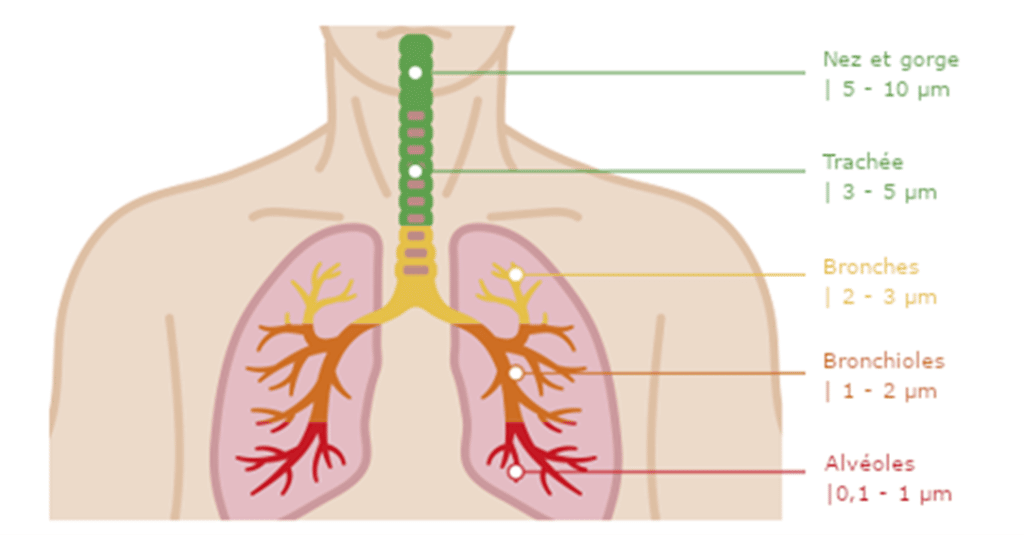
The dust particles contained in welding fumes are sometimes even smaller than 0.1 μm and are therefore alveolar, i.e. they can penetrate to the pulmonary alveoli and migrate into the bloodstream when inhaled.
Due to their fineness, welding fume particles are neither visible to the naked eye nor immediately noticeable. This makes welding fumes all the more dangerous, as they can be deposited in the body without being noticed at first, causing damage. Possible symptoms include dizziness, nausea, headaches, respiratory illness, nerve damage and even cancer.
Because of this health risk, welding fumes are considered hazardous substances within the meaning of the Ordinance on Hazardous Substances. To find out more about the classification and health effects of dust, see our page: What is dust and solvent in industry?
Whether welding fumes have a more irritating effect on the respiratory tract, or are toxic or carcinogenic, depends on the harmful substances produced:
Harmful substances
Aluminum and iron oxides, when ingested over a long period, strongly affect the lungs and respiratory tract. They can cause illnesses such as asthma, bronchitis and aluminosis (metal deposits in the lungs).
Toxic substances
Toxic substances are those that cause intoxication after a certain concentration in the body. Examples include manganese oxide, hydrocyanic acid and carbon monoxide. Possible symptoms of intoxication include rapid pulse, respiratory paralysis, dizziness, headache, nausea and pulmonary edema.
Carcinogenic substances
Another group of substances are carcinogens. Examples include lead oxide, nickel oxide and chromium (VI) compounds. The risk of cancer increases with the concentration of the substance.
OberA welding fume extraction system
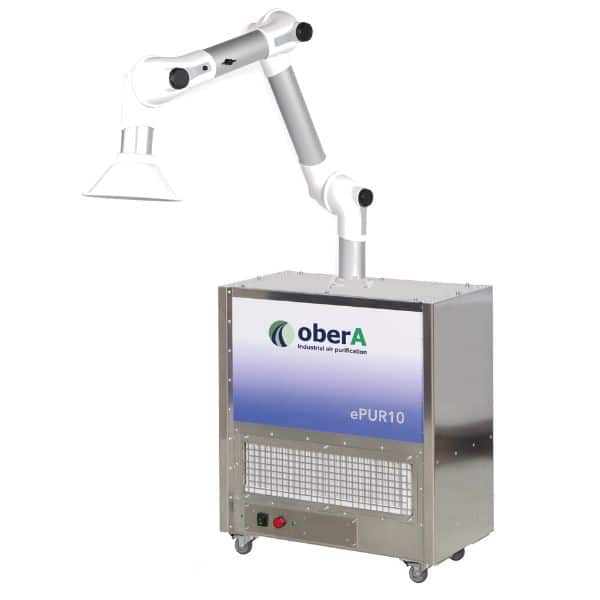
OberA offers capture, suction and filtration solutions for efficient extraction of welding fumes, to protect employee health and comply with welding fume legislation. To ensure optimum extraction of welding fumes, individual conditions must be taken into account, such as the type of workstation (mobile or fixed), the welding process or the nature of the part to be manufactured.
Mobile welding smoke filters
Welding smoke filters with mobile installation are particularly flexible, making them suitable for frequently changing locations. Welding fumes are captured directly where they are produced, and can generally be extracted from one or more workstations at the same time.
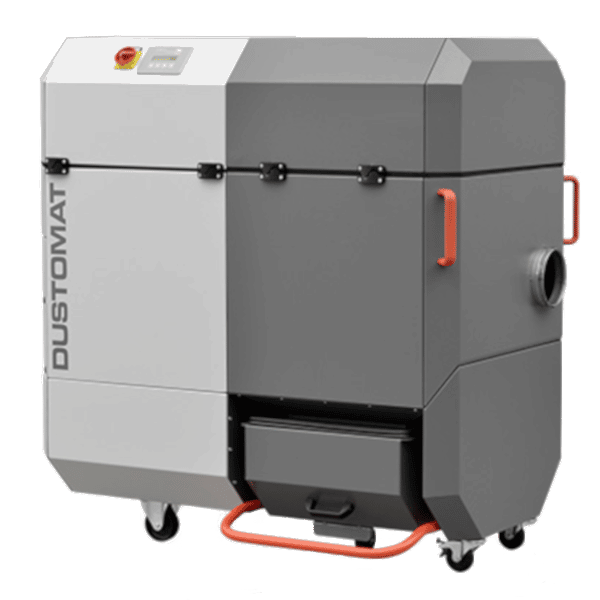
The DUSTOMAT 4 welding fume extractor is a tried-and-tested extraction solution for almost any application in the medium power range. The outlet of this unit can be piped for external filtered air evaluation.
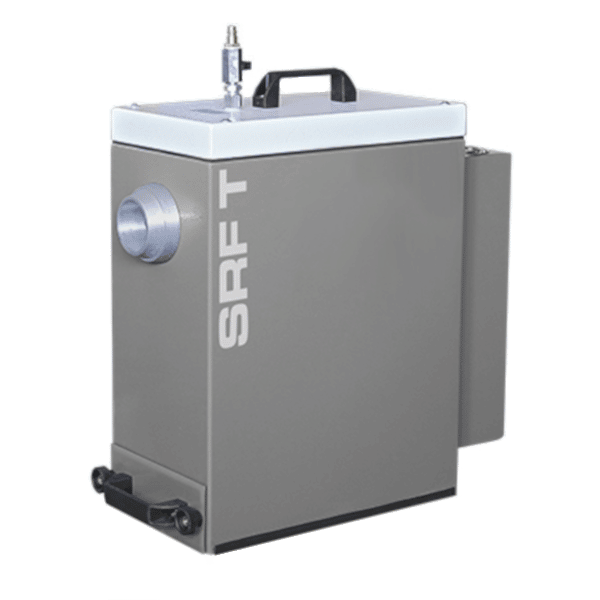
Compact models, such as the SRF T, are portable and ensure a high level of vacuum. They can be connected directly to welding torches.
The SRF K mobile is suitable for extracting large quantities of fumes and, thanks to a 99.9% degree of separation, allows air to be recirculated into the work area.
Fixed welding smoke filters
Alternatively, the various welding stations can be sucked into a centralized stationary suction system via a network of pipes distributed to each station.
The DUSTMAC welding fume extractor is a suction solution perfectly suited to flow rates from 4,000 to 100,000 m3/h. The equipment is generally positioned outside or inside the building, with filtered air exhausted to the outside. It can also be coupled with a double-flow heat exchanger to recover heat before evacuation to the outside.
Our effective devices against welding smoke
DUTOMAT 4.24
SRF-T
SRF-K
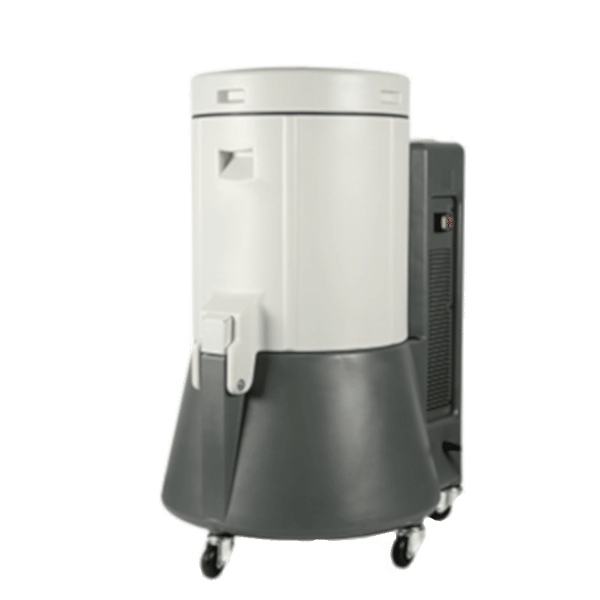
DUSTMAC
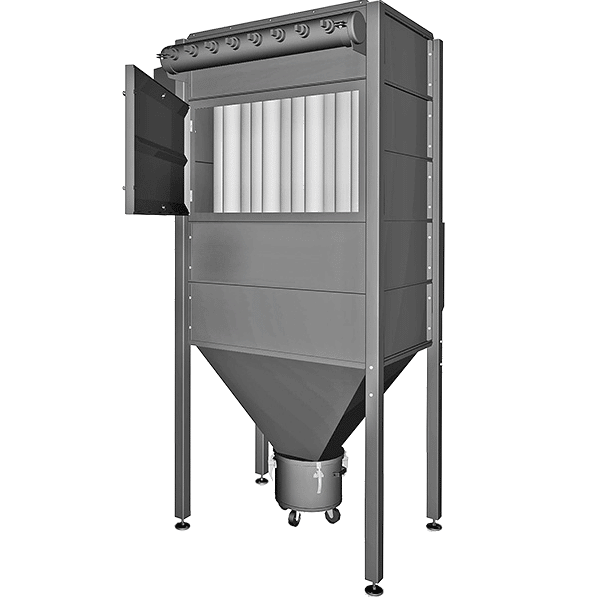
EPUR EX
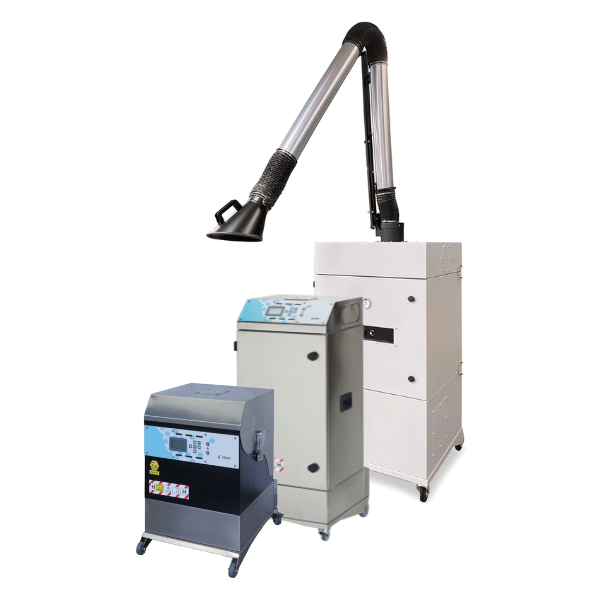
MOBFAN 4500
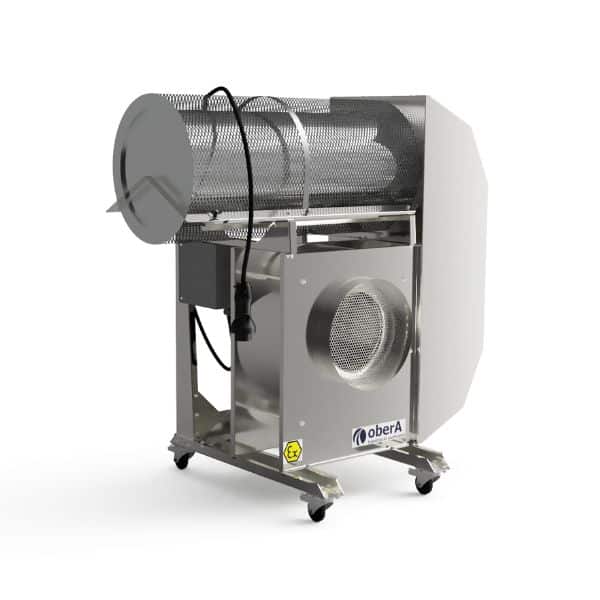
EPUR 10 B CA