Due to environmental concerns and rising energy costs, adiabatic air coolers are enjoying renewed interest, particularly for air cooling in industrial, commercial and service buildings.
Used for centuries, adiabatic cooling relies on evaporation to naturally temper the ambient air. The conversion of liquid water into vapor absorbs heat from the environment, reducing air temperature.
We’re all familiar with this cooling process, which is perceptible in everyday phenomena such as the cool sensation we feel after swimming in hot weather, when the warm, dry wind brushes against our wet skin.
However, a more detailed explanation is needed to fully understand the operating principle of adiabatic cooling, its advantages over air conditioning and its applications in industry and the community.

Sommaire
Adiabatic air cooler operation
How adiabatic evaporative cooling works
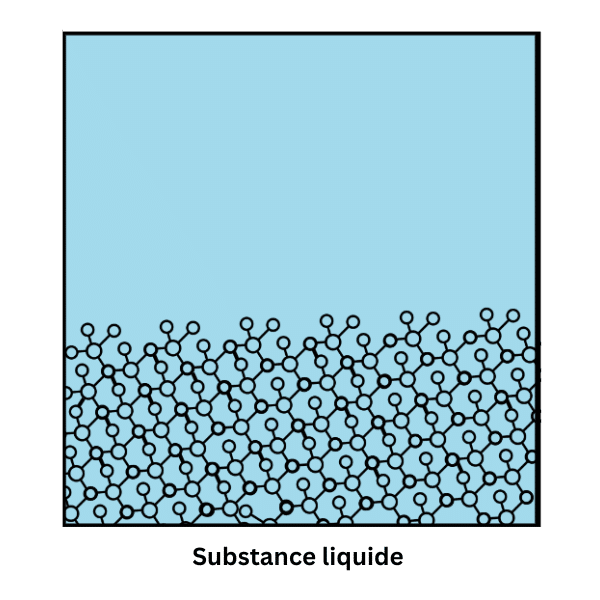
Adiabatic air cooling lowers the ambient temperature thanks to the energy absorbed by the water as it vaporizes. When water comes into contact with hot air, part of it evaporates. This change of state requires the absorption of heat energy to break the hydrogen bonds, an energy-intensive process known as the latent heat of vaporization. For a kilogram of water at 20°C to evaporate, it must absorb 2454 kJ of thermal energy.
This flow of heat from the air to the water cools the surrounding air. From an initial temperature of between 25°C and 40°C, the air can lose between 5°C and 11°C, depending on the size of the system and external humidity conditions. Blown-in, cooled air also has a higher humidity level, particularly when leaving a direct adiabatic cooler.
This cooling is called adiabatic, because energy is conserved inside the water/air system without exchange with the outside: sensible heat is transformed by evaporation into latent heat, i.e. moisture.

The main components of an adiabatic cooler
1. Adiabatic media
The evaporative panel is the centerpiece of adiabatic cooling. Their performance depends on a number of factors, such as air temperature (and more precisely the temperature differential between the dry and wet bulbs), relative air humidity and atmospheric pressure. These factors have a direct impact on the evaporation rate and, consequently, on the efficiency of the cooling system.
Panel design and materials are equally important. Made from fluted cellulose, these evaporative media must maximize the contact surface between air and water, which improves adiabatic cooling.
2. Water distribution system
Ensuring even, constant distribution of water over the adiabatic media is crucial to maintaining optimum panel saturation and thus guaranteeing efficient adiabatic cooling. This is the function of distributors, nozzles or drippers. Pumps, flow regulators and control valves maintain constant pressure in the water flow. Pipes minimize pressure losses.
Water quality is also an important factor in theefficiency of the evaporation process. A liquid free of salts and biological particles evaporates more easily. Demineralization filters and disinfection systems are used to guarantee water purity.
3. Ventilation system
Ventilation is essential in adiabatic cooling systems. Fans regulate the direction and speed of warm air flow to the humidified panels, effectively controlling air flow through the honeycomb media, enhancing the efficiency of the cooling process.
What’s more, the air fresheners are equipped with filters that capture particles and dust, improving indoor air quality and protecting the adiabatic media from clogging.
Evaporative cooling vs. air conditioning: energy, ecological and financial benefits
Energy efficiency
Very low electricity consumption for air cooling
The electrical consumption of an adiabatic cooler derives solely from ventilation and water circulation, and represents only 5% of the cooling capacity provided. In fact, 95% of the cooling capacity is generated by the natural process of water evaporation, unlike air conditioning, which relies entirely on electricity to produce cold. As a result, adiabatic air coolers consume 10 times less electricity than traditional air conditioning!
For information, to cool a 250 m² room, the electricity consumption of an adiabatic cooler varies between 1 and 3 kWh (depending on the model installed).
Extremely low water consumption for ambient cooling
An adiabatic cooler consumes around 120 liters of water per day to cool a 250 m² room. This quantity is insignificant: the industrial sector spends an average of 500 liters of water per day per worker.
To illustrate, if this room has 12 workstations, the water consumption of the cooler represents only 2% of the average daily consumption per employee. Adiabatic coolers therefore have a minimal impact on overall water consumption in industrial environments.
Outstanding energy efficiency
Evaporative cooling systems are more energy-efficient than air-conditioning systems based on compression refrigeration: COP 15-20 vs. 2-5.
What’s more, the energy efficiency of an adiabatic cooler increases with ambient temperature, as warm air promotes water evaporation, improving cooling capacity without significantly increasing energy demand. Air conditioning, on the other hand, requires a high level of energy intensity to achieve the desired indoor temperature.
The high energy efficiency of adiabatic cooling is therefore particularly advantageous during heatwaves or in industries with high heat dissipation.
Impact on the environment
Low carbon footprint
The adiabatic cooler uses only water vapor as a refrigerant, unlike air conditioners that employ chemical refrigerants with high global warming potential. This use of steam considerably reduces the carbon footprint and greenhouse gas emissions. Air conditioners are responsible for around 5% ofCO2 emissionsin the building sector.
By using water vapour, the adiabatic cooler does not contribute to air pollution, ozone depletion or global warming. Drained water can be discharged into the wastewater system without pre-treatment, adding a further ecological benefit.
Zero contribution to urban warming
The higher the air exchange rate, the more efficient the adiabatic cooling process. Adiabatic coolers are designed to operate efficiently in open environments. By releasing cool air into these open spaces, adiabatic coolers reduce the temperature inside buildings, but also around the premises. As a result, adiabatic cooling is an effective solution for combating urban warming and the formation of heat islands, unlike air conditioning, which expels the flow of warm air from condensers into the outside environment.
Component recyclability
Air coolers are durable and environmentally friendly, as they can be recycled at the end of their life cycle, as part of a drive to reduce environmental impact. Manufactured from recyclable materials such as propylene and coated aluminum, they contribute to more circular waste management. Electrical components are treated in compliance with European WEEE directives. Evaporative media can be composted in waste treatment facilities.
Cost and return on investment
Rapid payback on investment
Air coolers offer a significant financial advantage thanks to their relatively low initial cost.
Compared with conventional air conditioners, the installation costs of an adiabatic system are also reduced, even for fixed rooftop or wall-mounted installations. The mobile adiabatic cooler, meanwhile, requires no installation costs; a simple electrical outlet is all that’s needed.
The 10-year depreciation of the equipment represents only a few hundred euros a year.
Low operating costs
Air coolers stand out for their affordable running costs, covering both electricity and water expenses. For a 250 m² room, the daily running cost is usually just a few dozen cents.
Service and maintenance costs are around 10 times lower than those of conventional air conditioners, thanks to their simple design and the limited number of components requiring regular servicing. Maintenance tasks, such as cleaning the honeycomb media, filters and water-holding tank, are quick and do not require specialized personnel. Replacing the evaporative panel every two years is the main maintenance task.
Taking all these costs into account, adiabatic air coolers offer significantly lower overall operating costs than air-conditioning systems, which translates into a rapid return on investment.
Improved employee comfort and productivity
Productivity decreases as soon as temperatures rise above 24-26°C, and halves when thermometers exceed 33-34°C, a phenomenon known as heat stress. Maintaining optimum temperature and humidity conditions therefore has a direct impact on employee productivity.
Unlike air conditioning, which dries out the air and can cause a chill, adiabatic coolers create a comfortable working environment in line with regulatory standards for working conditions.
By maintaining adequate humidity, adiabatic air coolers also help prevent problems associated with electrostatic discharge, improving equipment safety and employee productivity. In addition to their health benefits, they emit a lower noise level than air conditioners (-10 dB), creating a quieter working atmosphere conducive to concentration.
Adiabatic evaporative cooler applications in industry and commercial buildings
Adiabatic evaporative cooling is an efficient, cost-effective solution for maintaining a comfortable, productive environment in industry and public buildings.
Industrial warehouses
These premises often require an efficient cooling system to maintain comfortable working conditions for staff and protect temperature-sensitive goods. The installation of mobile evaporative coolers offers a flexible adiabatic cooling solution that can be moved and adapted to different areas of the building. If the aim is to reduce the overall temperature of the building, it is preferable to install a fixed adiabatic system with a higher flow rate.
Production plants
In production plants, where machines and equipment often generate heat, adiabatic cooling is an effective solution for maintaining operational performance while complying with the indoor environment criteria laid down in the French Labour Code. With portable adiabatic cooling systems, it is possible to precisely target work areas or equipment requiring cooling, thus preserving the integrity of temperature-sensitive equipment. Evaporative coolers ensure adequate ventilation of premises and promote thermal comfort for workers.
Premises with large open volumes
These buildings present unique cooling challenges. High ceilings and frequently open doors make the use of conventional air conditioning impractical and too costly.
Adiabatic cooling is a cost-effective way of maintaining a comfortable temperature and humidity for operators, particularly when outside temperatures fluctuate. Some mobile adiabatic cooling systems are particularly interesting for providing thermal comfort for operators working outdoors (booths, mechanical workshops, etc.).
Adiabatic cooling is particularly well-suited to this type of space, with its large, open, unpartitioned volumes.
Large volumes with high population density
Direct adiabatic cooling offers an ideal solution for these large, highly frequented spaces, where solar gains combined with heat gains from the public and internal activities make temperature regulation difficult, especially when the building is non-air-conditioned and light in structure. Adiabatic coolers provide a supply of fresh air while maintaining a pleasant ambient temperature and optimum hygrometry, guaranteeing summer comfort for occupants. Ventilation integrated into evaporative coolers ensures proper air circulation.
