Sommaire
Why is it essential to choose the right dust collector for your production?
Dust particles can take the form of aerosols, chips, fumes, viruses or dusts. In the workplace, they have an impact on the entire working environment, from the health of employees to the deterioration of equipment (overheating of machines, wear and tear on parts, etc.).
So, installing the right dust collection equipment in your production process is essential in many respects, not least by opting for a solution based on the type of dust.
Which industrial dust collector to choose, depending on pollutants?
The nature and form of the pollutant are decisive criteria in selecting the best dust collector model. Explanations with different product ranges.
Suction of wood, metal, plastic and fiber chips
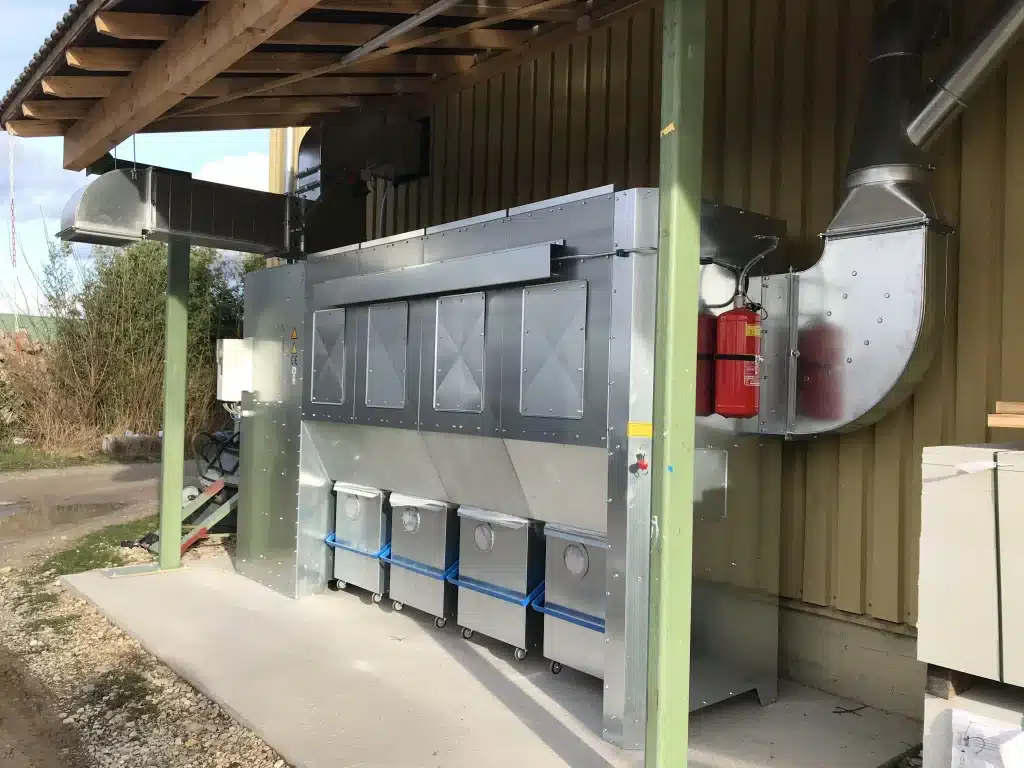
Like the AAS, MOBIL, OBNEX or DUSTMAC S ranges, industrial baghouse dust collectors are ideal for extracting dusts such as swarf, as well as paper and cardboard fibers. They also have the advantage of being easy to maintain.
Some baghouses, such as the OBNEX or DUSTMAC S range, are particularly well-suited to large quantities of flammable and explosive dust (ATEX zoning). In particular, this solution collects the coarsest particles thanks to its pre-separation baffle, and is equipped with innovative devices to prevent outbreaks of fire.
Fine dust collector
Grinding dust, sanding dust… Several ranges of dust collectors are adapted to industrialists who generate fine dust and smoke in their workshops (metalworking, plastics industry). These include :
- Dust extractors (e.g. TK and OM series), often used in mechanical and metalworking workshops. Their applications are suitable for dusty air extraction in environments that generate moderate dust and occasional use.
- Small industrial dust collectors equipped with saturation filter media that retain and store dust, as in the AIRBOX range. These units are used when fumes or very small quantities of dust need to be extracted, and for occasional use.
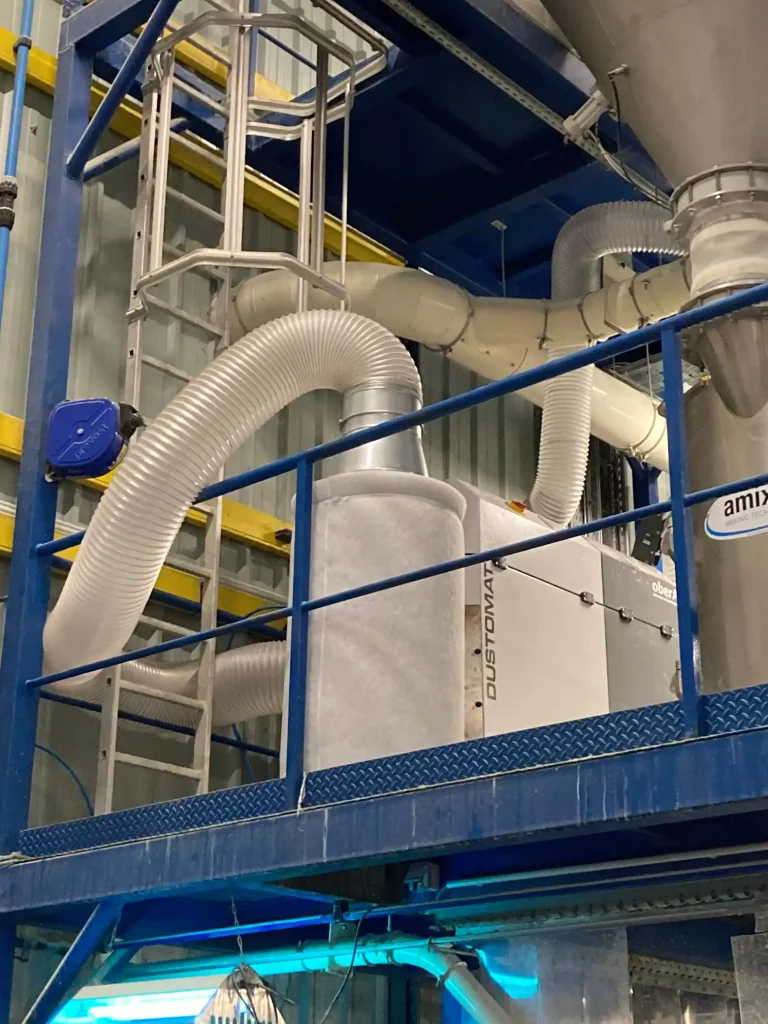
- Mobile dust collectors with high air intake capacity (e.g. DUSTOMAT, MOBEX), ideal for extracting fine dusts, fumes and hazardous particles, thanks to an upgradeable design that allows the addition of terminal filters (HEPA class H filter).
- Industrial cartridge dust collectors (e.g. DUSTMAC P). These devices are fixed and positioned outside or inside buildings. Pollutants are collected at each workstation via a fixed piping network.
Good to know: It’s important to ensure that the filter system is compatible with the material being vacuumed. Carcinogenic pollutants, explosive materials, sticky dusts in the food industry (oil, sugar and moisture), sparks in welding shops, wood chips in carpentry, moisture extraction… There’s a type of filter to meet the specific needs of each particle.
Fumes: welding, laser, fog
Preference should be given to industrial cartridge dust collectors (SRF, AIRBOX, ESTMAC 1500/1800, DUSTOMAT 4-10 or 4-24, MOBEX, DUSTMAC F…) designed to extract welding fumes and dry dusts. The device can be fixed or portable for source extraction (connected to welding torches or extraction arms). In addition to their fume extraction efficiency, cartridge units feature a cleanable filtration system that reduces maintenance costs.
Industrial dust collectors: what other criteria should you take into account when making your choice?
There are a number of other factors to consider when choosing the right model:
- The frequency of use of the industrial dust collector (number of hours of use): we won’t recommend the same solution for a factory that needs a vacuum system running 24 hours a day versus a workshop with occasional needs. This criterion not only determines the dust collector’s suction capacity, but also its filtration and cleaning system (automatic or manual filter cleaning) and its start-up (automatic or manual start-up cycle).
- User-friendliness of dust collection equipment: depending on the range of dust collectors chosen, several systems will make it easier to use. One example is the cleaning system, which can be manual (cleaning by shaking, using brushes or compressed air, triggered manually when the unit is switched off, etc.), or fully automated (cleaning by compressed air jet depending on filter cartridge clogging).
Did you know? OberA teams have specialized in the design and manufacture of air quality equipment for over 20 years. The company offers a diagnosis of your production workshop, followed by a test phase (1 month on average) to advise you on the most optimal industrial dust collector model. You benefit from personalized support, from the study of your needs to theinstallation of the dust collection system.
The type of particles emitted, the application, the comfort of use, the environment and the maintenance of the dust collector are all criteria that will enable the OberA specialists to guide you towards the most appropriate model.
