The aeronautics sector is subject to particularly strict standards and regulations ondust and air quality (ISO 14644 standard, for example). To guarantee safe working conditions for our teams, we strongly recommend the use of industrial vacuum systems such as the suction table. It captures the pollutants emitted by machining operations at source, to ensure maximum safety on the work surface.
Focus on our industrial vacuum tables to reduce exposure to aluminum pollutants in the aeronautics industry.
Sommaire
Aerospace players: what are the risks of aluminum dust in your plant?

A component widely used in the aeronautics industry for its outstanding electrical and thermal properties, working with aluminum poses health risks for your operators. Sanding, grinding and cutting operations (to name but a few) generate toxic particles that are partly responsible for a number of complications:
- Respiratory diseases (aluminous pulmonary fibrosis, aluminium inhalation pneumonitis, asthma);
- Respiratory and skin irritations.
In addition, the accumulation of aluminum dust (aluminum oxide to be precise, which is naturally abrasive) can damage your machines and equipment. Obstruction of filters and air ducts, alteration of sensitive components such as electrical circuits… The impacts are numerous and can ultimately lead to machine malfunctions and breakdowns.
Finally, aluminum dust is combustible and represents an ATEX risk. That’s why we recommendATEX-compliant equipment.
Did you know? Two pollutants have been identified: aluminum and aluminum oxide. Aluminum oxide forms on the surface of alumina when exposed to oxygen in the air. It is a white, odorless powder, insoluble in water. Both are toxic pollutants which, when inhaled, represent health risks for workers.
To maximize workplace safety, solutions for capturing and treating dusts, fumes and vapors offer safe alternatives. They also comply with regulations on air quality and safety in the workplace.
So, in addition to PPE, the implementation of medical surveillance programs and operator training, theinstallation of air treatment equipment such as suction tables enhances worker safety.
Aerospace industry: how to choose your suction table?
We offer several ranges of vacuum tables to meet specific needs. To ensure you make the right choice for the pollutants emitted by your production, we offer a thorough analysis of your working environment.
” This step is crucial in determining the nature and concentration of pollutants. While working with aluminum parts does indeed emit harmful dusts, other industrial operations carried out in your plant may generate other pollutants, such as fumes, solvents and even fine dusts (VOCs). “says Thibaut Samsel, OberA’s Technical Manager.
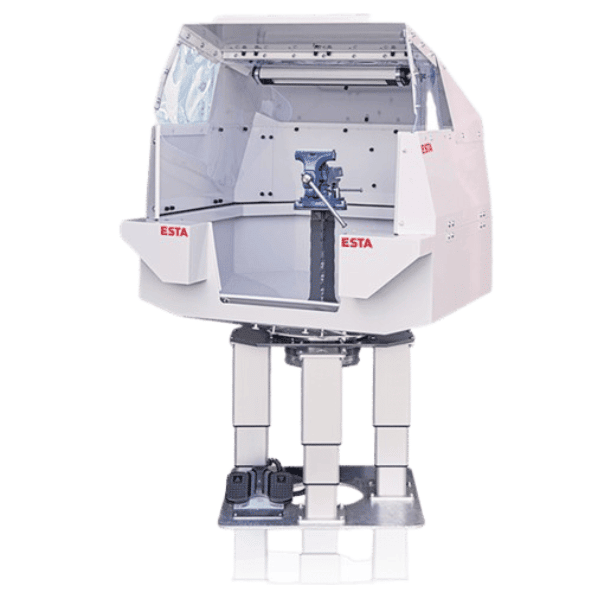
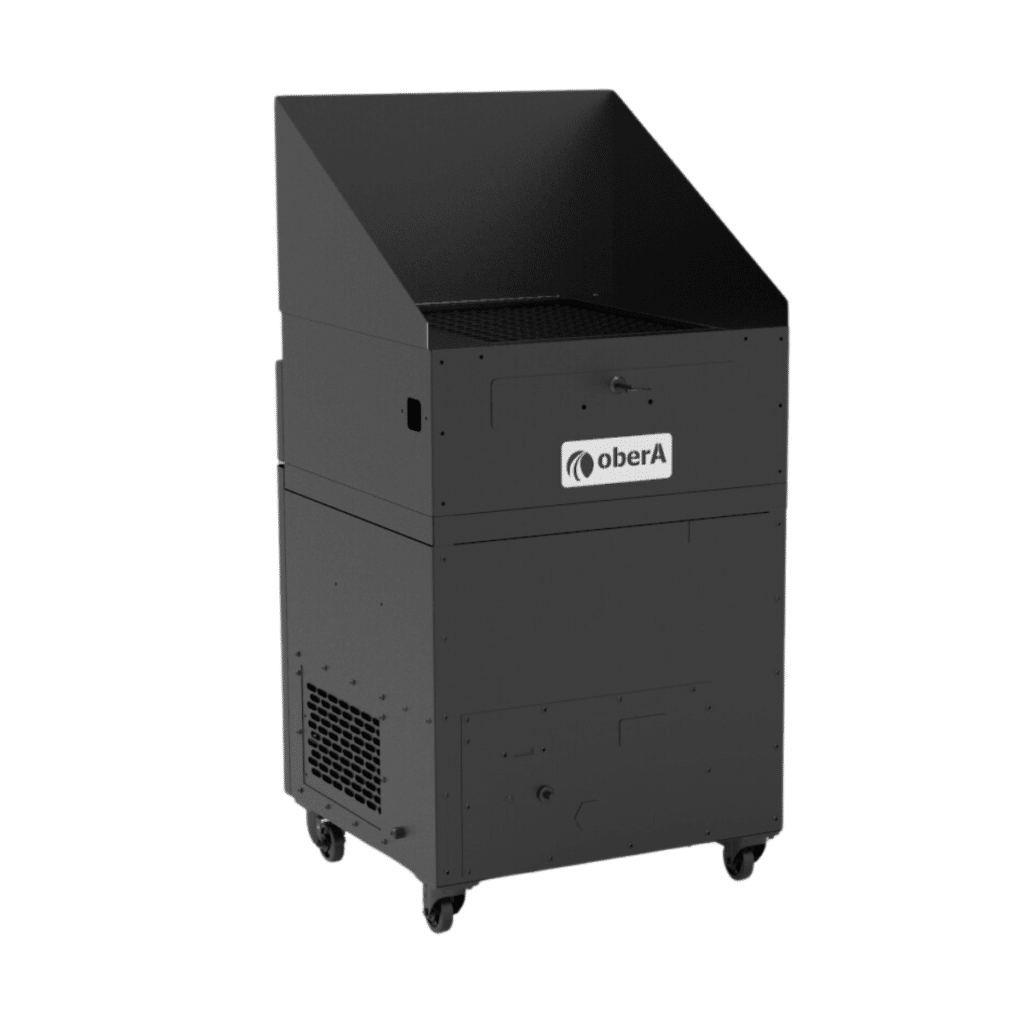
This first step will determine the most appropriate model of vacuum table, as well as the configuration of the filtration system. Another decisive criterion is the size of the parts to be machined and the space available in your workshop. We recommend, for example, A & AT industrial tables, or our stand-alone tables for large workpieces. The 360° rotary extraction table, on the other hand, is ideal for machining smaller, complex parts. In addition, depending on your space constraints, you may need to opt for compact or custom-designed equipment.
Finally, other features such asergonomic adjustments and accessories (lighting, connectors to other equipment, customizable grids) can be added for ease of use or to comply with safety standards. In all cases, at the quotation stage, we work with you to study the specific features of your workshop, so as to guarantee you the most suitable equipment.
Our suction tables for aerospace companies and industrial subcontractors


- Robust construction, galvanized steel grid
- Coarse waste drawer
- To be connected to a side dust collector or ventilation system
- Capture all pollutants: aluminum, steel, stainless steel and plastic dusts, solvents, cleaners, glues, etc.
- Available in various sizes (including made-to-measure)
- Rotates on its own axis for complete access to the part
- Maximum ergonomics
- Optimized airflow and flexible hood on worktop
- To be connected to a side dust collector or ventilation system
- Ideal for heavy pollutants, sanding dust, welding fumes, deburring of metal parts
- Front suction nozzle
- Available in ATEX version
- Configurable 2 or 3-stage filtration system, e.g. G4 prefilter, particle filter, activated carbon
- Ideal for solvents/odors, VOCs
- Continuous airflow adjustment by knob
- Under-grid waste drawer
- EC technology (quiet, economical operation)
- Customizable extraction bench
- Spark separator
- Double-compartment waste bin
- Ideal for dusts, solvents/odors, fumes
- Available in ATEX version
