Sommaire
Industrial dust
What exactly is dust? The beautiful golden flakes that dance in the air when the sun shines? The gray coating on shelves and desks that can drive people crazy? Or the thick “lint” under machines?
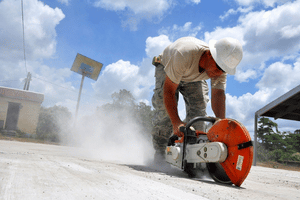
Whether on the building site, in woodworking, in the bakery, in a workshop or logistics warehouse, it’s not uncommon for people who grind, drill, mill or grind raw materials, who blow dust with compressed air, who pack, store, transport or mix goods to generate dust. The same applies to tearing and emptying bags, or sweeping up spilled materials with a broom.
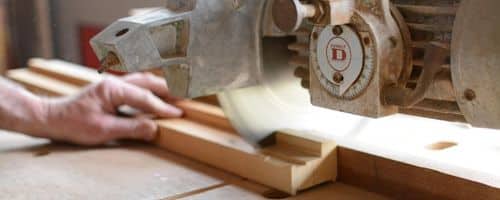
Dust is all of these things. Dust is the name given to the finest particles suspended in the air. They can come from anywhere: space, volcanic eruptions, fires, industry or nature.
But dust is also a hazardous substance. This is often forgotten. The risks range from purely mechanical irritation of the respiratory tract, through acute irritation or toxicity (e.g. chemical burns), to the development of chronic inflammatory processes and tumor formation. The organs most affected are the bronchi and lungs, but also the mucous membranes of the nose and eyes, the skin and other organs throughout the body.
What exactly is dust?
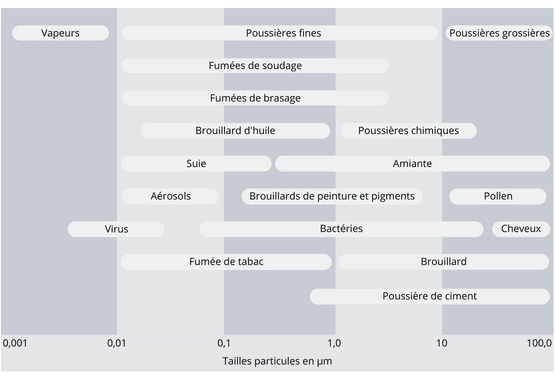
In general, dust is a collection of tiny particles, invisible or visible, found in the air. The size of dust particles is measured in micrometers (μm), or millionths of a meter.
How is dust formed?
Dusts are solid particles that are very finely dispersed in the air. They are produced by the mechanical processing of solid materials (e.g. grinding or surface treatment) or by suspension (e.g. blowing with compressed air or dry sweeping with a broom) and thus end up in the air we breathe. Solid particles formed by chemical or thermal processes (e.g. welding) and also very finely dispersed in the air are called fumes. In the broadest sense of the term, they are dust.
What role does fine dust size play?
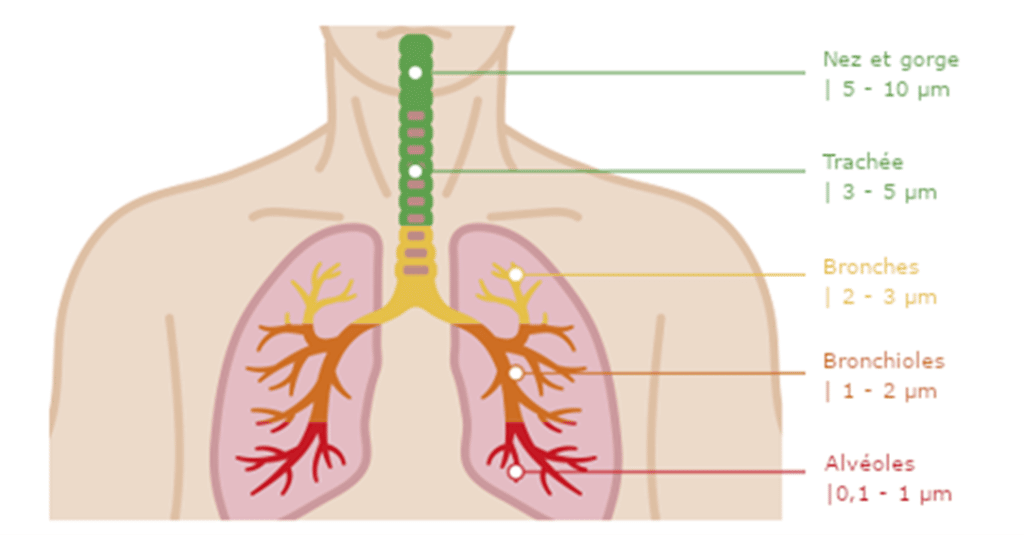
The smaller the fine dust, the more harmful it is to health. To penetrate the respiratory tract, particles must be smaller than ten microns. Below 2.5 microns, they penetrate the lungs. Ultrafine particles are almost as small as proteins, penetrating the body’s cells and reaching the bloodstream.
Type of dust
In industry and legislation, a distinction is made between different types of dust, such as E, A and U dusts. A and U dusts are the most common in industry.
Dust E
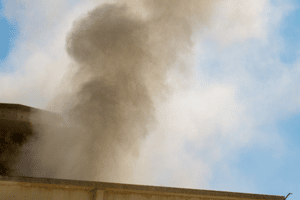
Cement dust is part of the“inhalable dust fraction“. Dust E is the so-called “inhalable dust fraction”. These are particles that can be inhaled through the mouth and nose. In addition to flower pollens, the most frequently cited examples are cement dust and sand. Particles are generally smaller than 100 µm. 1 µm corresponds to 1/1,000,000 meters.
dust A
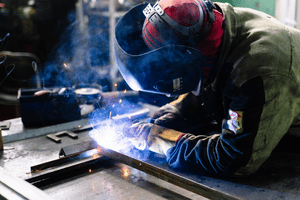
Welding fumes are part of the“respirable dust fraction“. Dust A is the so-called “respirable dust fraction”. These are particles so small that they can penetrate the pulmonary alveoli. It includes many fumes (e.g. welding fumes) and quartz dust. These particles are smaller than 5 µm, i.e. considerably smaller than E-dust particles.
Dust U
U-dust refers to ultra-fine particles. Even finer particles are classified as U-dust – for ultrafine particles or nanoparticles. These dusts are smaller than 100 nanometers. 1 Nm corresponds to 1/1,000,000,000 meters.
Fibers and fiber dust
For the sake of completeness, let’s not forget fibers. These are among the many types of dust that form “spontaneously” in nature or are produced in industry by manual or mechanical processing.
In nature, they are produced by erosion and flowering plants. They are dispersed in the air by the wind, making them an integral part of the air we breathe all the time.
In industry, on the other hand, we strive to capture the dust or fumes produced during the machining of parts directly at source, in order to purify the air and avoid further polluting the air we breathe. Wherever it is not possible to capture dust directly for technical reasons linked to the process, it is possible to install what is known as space ventilation.

Why is dust harmful?
ENVIRONMENTAL IMPACT
- Suspended dust influences (and reduces) visibility.
- Dust represents an immediate danger to machines and equipment, and can be the cause of technical problems such as overheating of electronics in the absence of ventilation, rapid wear of moving parts, and malfunctioning sensors.
- Suspended dust is deposited over time in the form of a layer (e.g. greasy).
- This dust can be blown back into the workspace by the slightest air movement.
- The dust that settles pollutes the products.
HEALTH EFFECTS
From a health point of view, particles smaller than 10 or 2.5 microns are the most important.
The inhalable fraction is the most dangerous. It penetrates the pulmonary alveoli and deposits there, altering the lungs’ gas exchange capacity and causing inflammation. The reduced oxygen uptake also indirectly strains the cardiovascular system.
Symptoms of zinc poisoning, also known as “smelter’s fever”, include a sweet taste in the mouth, sweating, chills and pain in the limbs. Zinc poisoning is caused byinhaling fumes produced during the galvanizing or welding of galvanized materials.
Contact with dust can become a source of illness if :
- concentration is very high,
- dust particles are small enough to penetrate deep into the lungs (pulmonary alveoli) via the trachea and bronchi,
- particle shape (e.g. fiber) favors penetration,
- dust contains toxic substances.
Possible consequences include coughing, respiratory distress, bronchitis, asthma, skin and eye irritation.
People exposed to high levels of fine particle pollution therefore run a higher risk of cardiovascular disease, severe respiratory tract damage, nervous system damage, severe chronic lung disease, lung cancer, myocardial infarction or stroke, as well as allergies. These risk factors reduce life expectancy.
Where does the danger lie, and how is it dangerous for employees?
It all depends on where you work and what you handle. It’s not just toxic or ultrafine dusts that can cause respiratory illness in the event of heavy exposure, but any dust.
The harmful effect depends on :
- type of dust,
- the duration andextent of dustexposure ,
- where they are deposited in the respiratory tract,
- particle size .
Absorbing large quantities of dust over a short period of time, or absorbing dust over many years, even in small quantities per day, is particularly dangerous.Effective dust extraction is therefore essential in such circumstances.
Dust in the workplace
Occupational exposure limit values
The OELV (Occupational Exposure Limit) is defined as the maximum concentration of a pollutant in the air in the workplace. For more information, please see our article on dust filtration and Occupational Exposure Limits.
Health risks in the workplace
In occupational health and safety, health risks in the workplace are differentiated according to particle size, shape and material properties. The TLV is defined as the maximum concentration of a pollutant in the air in the workplace. This value is also known as the WEL (Workplace Exposure Limit). By measuring the concentration of dust particles in the air in the workplace, it is possible to check whether the VLEP has been respected.
Dust exposure measurement
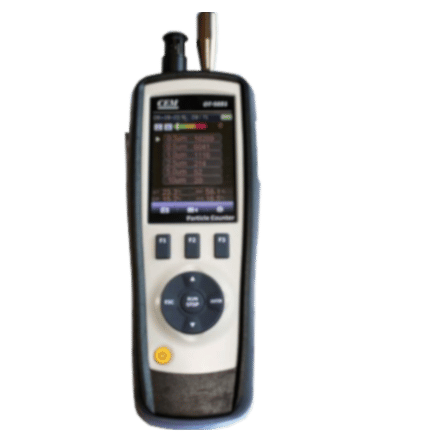
Dust measuring devices can be used to determine whether the level of dust in the workplace is tolerable for health reasons. The devices automatically extract air from the working environment and “analyze” the dust. The quantity of dust balanced is then used to calculate the concentration in the air.
Measurements are carried out by trade associations or accredited institutes (service providers). Please do not hesitate to contact us. Our sales staff are fully qualified to carry out this type of measurement.
Dust class
The legal framework and current regulatory situation
International standard IEC 60 335-2-69 divides dusts into three different dust classes: L, M and H.
DUST CLASS L
Simple, harmless dusts such as house dust and materials like sand, gravel and earth.
DUST CLASS M
Health-risk dusts such as wood dust, as well as putty, primer and varnish dusts.
DUST CLASS H
Dusts hazardous to health when working with spores, mineral fibers, glass wool, plaster, cement, concrete, quartz, glue or paints (latex and oil).
OberA can help you classify the dusts produced in your company. Dust classes are expressed in VLEP or LEMT values. This value describes the maximum permissible concentration in the workplace (indicated in mg/m³) that will not make you ill in the event of prolonged exposure (8 hours a day). The lower the limit value, the more dangerous the dust.
Health protection measures
- Performing a risk assessment
- Use low-dust products whenever possible
- Use low-dust processes (e.g. wet processing, vacuuming)
- Compliance with occupational exposure limit values (OELVs) for dusts.
- Organizational and technical measures take precedence over personal protection measures.
- Operator training
- Do not sweep dry. Do not blow with compressed air.
- Wear protective equipment for dust-laden activities.
- Regularly cleanse the skin by washing or showering.
- If these measures do not prevent exposure to dust exceeding the TLVs, protective gloves and personal respiratory protection should be used.
- Special preventive occupational medicine examinations
The right extraction system for your dust problems
OberA offers industry a wide range of innovative suction products and customized suction solutions. With the right type of filter, almost any type of chip or dust can be separated. Find out more about our wide range of products. We’ll also find the right extraction solution for your dust problem.
