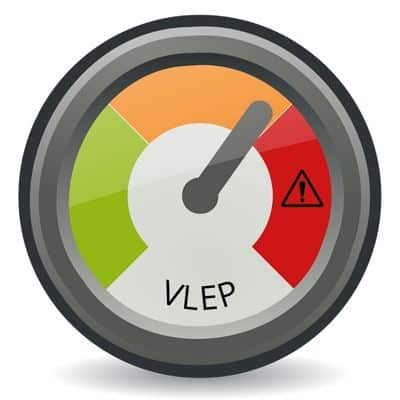
This is a reference value for assessing the level of exposure in the air that a person can breathe for a given period of time. They are expressed in the form of an airborne concentration for a given chemical substance and for a regulated time. It is considered that only exposure to higher concentrations or over a longer period of time will have health consequences.
Sommaire
How are TLVs set?
Since Directive 98/24/EC, ELVs have been set on the basis of a scientific assessment of the relationship between the health effects of hazardous substances and the level of occupational exposure. For the purpose of setting VLEPs, the reference period is either 8 hours for 8-hour VLEPs, or 15 minutes for short-term VLEPs.
What are the different types of VLEP?
There are two types of regulatory limit value:
- The restrictive VLEP, which even at low levels of exposure, constitutes a health risk. They expose the employer to sanctions in the event of non-compliance. They are laid down by decree in the Council of State and incorporated into the Labor Code.
- Indicative OELs are based solely on medical studies which establish a net threshold below which the substance presents no health risk.
How are TLVs monitored?
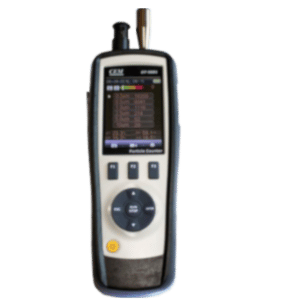
ELVs are monitored by air analyzer systems. Whether it’s a box, a probe or an air analyzer, the device must be located where the pollutant is present. These different devices will analyze the air and determine the quantity and type of pollutants present in the air in your workspace. The results of atmospheric controls are then entered into a national database(SCOLA database), which will enable the public authorities to make use of these statistics.
The results of atmospheric measurements and controls are communicated to the occupational physician and the CHSCT. They help assess the risks generated by exposure to chemical agents, and determine the appropriate preventive measures.
Who can control VLEP?
Generally speaking, anyone in possession of an air analyzer can check the ELVs present on their premises. However, in the eyes of the law, your inspection will be worthless because you are not accredited. It is therefore essential to use COFRAC (Comité Français d’Accréditation) accredited organizations. These bodies, which are independent of the companies in which the technical inspections are carried out, are accredited to draw up the measurement strategy, samples and analyses.
How to prevent exposure to hazardous chemicals and CMRs in the workplace?
According to the decree and orders of December 15, 2009, employers must carry out a risk assessment by measuring air quality at least once a year, and whenever changes are made that are likely to affect employee exposure.
Is compliance with VLEP mandatory?
Yes. Exceeding a restrictive regulatory VLEP must result in :
- In the case of chemical agents other than CMR 1A or 1B, or total and respirable dusts, immediate implementation of protective measures (articles R. 4412-28 and R. 4412-29),
- In the case of a chemical agent classified as CMR category 1A or 1B, tostop work at the workstations concerned until measures have been implemented to protect employees (articles R. 4412-77 and R. 4412-78).
If an indicative regulatory VLEP is exceeded, a new risk assessment must be carried out to determine the appropriate prevention and protection measures.
What to do if the company’s TLVs are exceeded?
If the VLEP concerned is restrictive, immediate implementation of preventive measures for HCAs (Hazardous Chemical Agents), and complete shutdown of the workstations concerned, until appropriate measures and protection have been put in place for CMR .
If the VLEP concerned is indicative, the employer carries out a risk assessment to determine the appropriate prevention and protection measures.
The labour inspector or controller may also ask the company to have the regulatory VLEP levels checked by an accredited body.
The accredited organization will define its sampling strategy, which will cover the entire period during which the employee is exposed, in order to implement corrective actions that will then be periodically monitored.
During the first measurement campaign (a minimum of three measurements per GEH – homogeneous exposure group), if all the results are below 10% of the set VLEP, the risk of exceeding it is nil, and it is therefore not compulsory to carry out the other two campaigns.
If TLVs are exceeded, corrective action must be taken as quickly as possible, and the initial assessment repeated.
If the result of the measurement is between 10% of the VLEP and the VLEP, the measurement campaign continues. At the end of the third measurement campaign, the results obtained are analyzed, again on the basis of statistical calculations. It is therefore possible to deduce the probability of these VLEPs being exceeded, and to establish general prevention principles.
Employers are obliged to draw up an inventory of all the chemical products handled on their premises, to assess the risks and to train their employees. He must formalize the results for each operator in the form of a nominative exposure sheet listing all measurements and results. These sheets are given to the occupational physician. All garages, dry cleaners, joineries, SMEs, large groups, cleaning companies, etc. are affected by these regulations.
What are the risks for employers who fail to meet these obligations?
The employer has a huge responsibility. But above all, if an occupational disease is declared, he or she will be held civilly and criminally liable.
List of chemical agents with binding regulatory occupational exposure limit values (article R. 4412-149 of the French Labor Code).
2-Butoxyethyl acetate
2-ethoxyethyl acetate
Isopentyl acetate
2-Methoxyethyl acetate
2-Methoxy-1-methylethyl acetate
1-Methylbutyl acetate
Pentyl acetate
Vinyl acetate
Acetone Acetonitrile
Hydrocyanic acid
Ethyl acrylate
Methyl acrylate
Asbestos
Anhydrous ammonia
Sodium azide
Benzene Bisphenol A (dust. Inh.)
Wood
Brome
Bromomethane (1)
2-Butoxyethanol
Chlorine
Chlorobenzene
Hydrogen chloride
Vinyl chloride
Hexavalent chromium and its compounds in Cr (2014)
Cumene
Cyclohexane
Cyclohexanone
1,2-Dichlorobenzene
Dichloromethane
Diethylamine.
N,N-Dimethylacetamide
Trichloromethane Triethylamine
1,2,3-Trimethylbenzene
1,2,4-Trimethylbenzene
Dimethylamine
Dimethylformamide
1,4-Dioxane
Ethanolamine
2-Ethoxyethanol Ethylamine.
Ethylbenzene
Carcinogenic refractory ceramic fibers
Hydrogen fluoride
n-Heptane
2-Heptanone
3-Heptanone
n-Hexane
Phosphorus hydrogen
Methyl isocyanate
Mercury and bivalent inorganic compounds
Methyl methacrylate
Methanol
2-Methoxyethanol (2-methoxymethylthoxy)-propanol
1-Methoxy-2-propanol
Methyl ethyl ketone
Methyl isobutyl ketone
Morpholine
Diethyl oxide
Methyl tert-butyl ether n-Pentane
Phenol
Phosgene
Phosphorus (pentachloride) Lead metal and compounds, as Pb
Dust deemed to have no specific effect
Crystalline silicas (see § 2.2.3 ED 984) cristobalite quartz tridymite
Sulfotep
Carbon sulphide
Hydrogen sulfide
Tetrachloroethylene
Tetrahydrofuran
Toluene
1,2,4-Trichlorobenzene
