The metallurgy sector encompasses a wide range of activities, from steelmaking to workshop welding operations. It is characterized by extreme temperatures, generated by melting processes as well as by metal processing operations. These challenging thermal conditions, inherent to the metallurgy industry, are further exacerbated in summer, particularly during heatwaves. The accumulation of thermal energy in buildings can have negative repercussions on productivity, worker safety, and even machine performance. To remedy this, the air cooler provides an effective solution, combining cooling and air quality improvement. Specifically designed for industrial environments subject to high thermal stress, this device cools the atmosphere while ensuring a healthier environment for operators.

Sommaire
Adiabatic air cooler operation
Principle of water evaporation
An air cooler operates on the physical principle of water evaporation, a natural phenomenon that reduces ambient air temperature. Technically, hot air is drawn in by the cooler’s fan, then directed through an evaporative medium, typically a water-saturated honeycomb cellulose pad. As it evaporates, the water absorbs the heat energy contained in the air, thereby lowering its temperature and slightly increasing its humidity before it is diffused into the space to be cooled. This process is referred to as adiabatic or evaporative cooling.
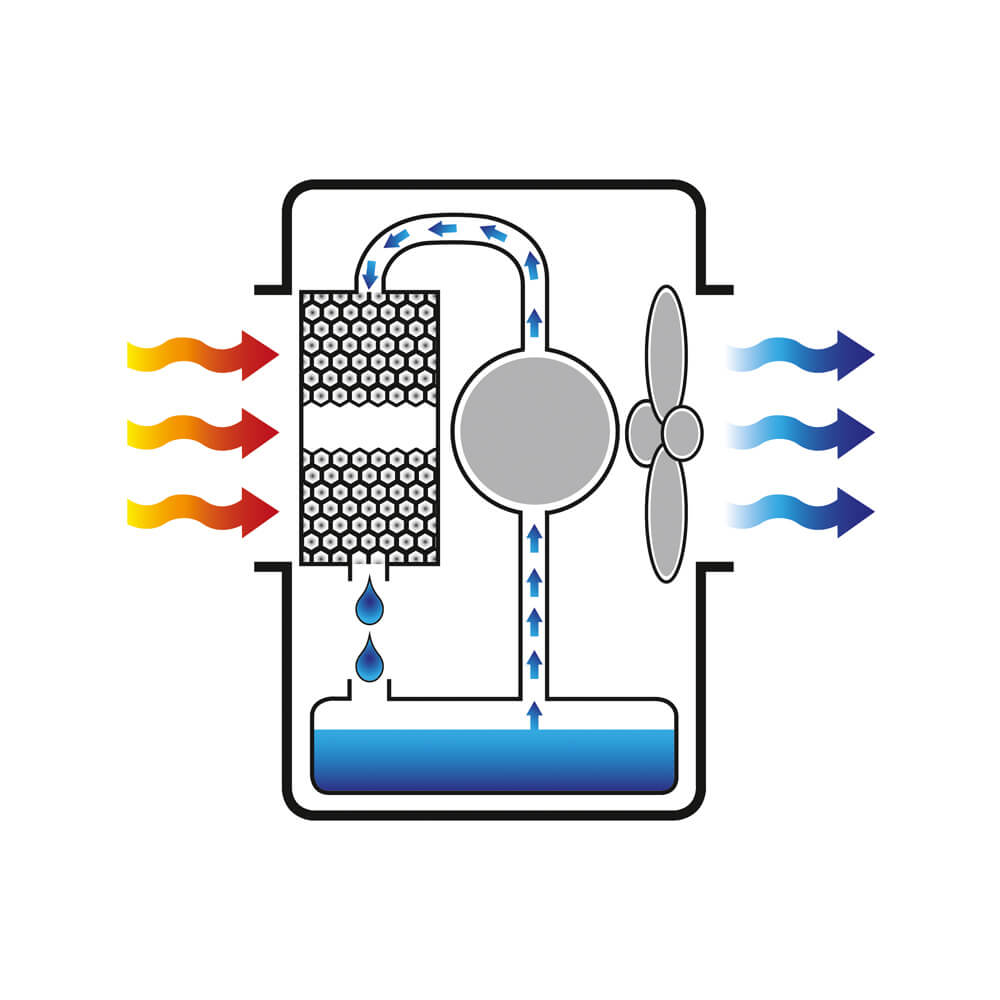
Ecological and economic benefits of the adiabatic system
One of the main advantages of air coolers is their low energy consumption compared to conventional air conditioning systems. Indeed, the latter use chemical refrigerants and require energy-intensive compressors, whereas air coolers use natural water evaporation, an energy-efficient process.
Furthermore, by not using polluting refrigerant gases, this system contributes to reducing the industry’s carbon footprint. Adiabatic cooling generates substantial energy cost savings, especially in premises where thermal conditions are very high and can vary considerably from one area to another.
Evaporative coolers therefore offer an efficient, energy-efficient cooling solution, particularly suited to large volumes and open spaces, as is the case in the metalworking sector.

Specific cooling requirements in the metalworking industry
High temperatures generated by metallurgical processes
Temperatures in metallurgical plants can reach dangerous levels. For example, during metal smelting in blast furnaces, the temperature reaches 1,600 °C, which significantly increases thermal and radiant energy in adjacent areas. These temperatures can not only affect equipment and materials but also compromise the comfort and well-being of employees as well as the reliability of metallurgical processes.
Impact of temperatures on worker productivity and safety
Excessive temperatures in the professional environment lead to increased fatigue, a high risk of exhaustion, and dehydration. INRS emphasizes that temperatures above 33 °C significantly increase these dangers. These conditions not only compromise employee well-being but also affect the quality and efficiency of operations. Beyond 33-34 °C, productivity can drop by up to 50%, while errors and omissions multiply, increasing risks to personnel safety. Furthermore, high temperatures can impact equipment, reducing their efficiency and increasing the frequency of breakdowns and production stoppages.
Advantages of evaporative coolers in metallurgical environments
Efficient ambient heat reduction

The main advantage of the air cooler is its ability to effectively lower the temperature in large open spaces, such as metallurgical workshops. Thanks to adiabatic systems, the air in steel mills, ironworks, and foundries is constantly cooled, with a temperature drop of a few degrees to about ten degrees, thus ensuring optimal thermal conditions. This contributes to improving worker comfort and enhancing on-site safety. The cooler also allows for rapid cooling of specific high-heat areas, thereby ensuring a more comfortable working environment.
Improving working conditions and air quality
The air cooler actively contributes to improving air quality. Equipped with filters, it reduces the content of impurities, gases, irritating or toxic vapors and fumes, as well as metallic particles and dust. The purified air thus supplied becomes healthier, reducing the risks of respiratory disorders and promoting the overall well-being of employees.
Reduced risk of corrosion
Heat promotes the chemical reaction between oxygen in the air and metals, leading to rust formation, while humidity accelerates the oxidation process. The air cooler helps limit temperature peaks and maintains a natural humidity level. This thermal regulation plays an important role in preserving metallic materials by reducing the risk of flash rust and other forms of corrosion. It also helps extend the lifespan of equipment and maintain the quality of metallic products.
Mobility and flexibility
Adiabatic air coolers offer great flexibility, as they can be installed as mobile and portable units and directed towards specific areas requiring urgent and targeted cooling. This adaptability is particularly beneficial in metallurgical environments, where production areas can vary and where a mobile and adaptable cooling system is a priority.
Selection criteria for a metalworking air cooler
Airflow capacity for large volumes

In metallurgical plants, the air cooler must have sufficient power to process large volumes of air. Designed to cool vast spaces ranging from several tens to several hundreds of square meters, these devices ensure sufficient airflow to maintain an optimal temperature throughout the work area.
Robustness and durability in industrial environments
Adiabatic air coolers are renowned for their reliability and robustness, thanks to their ultra-simple design and operating mode. They are therefore particularly suited to demanding industrial environments, such as those in metallurgy, where they must operate reliably and withstand the specific conditions of this sector.
Contact an Obera expert to find out more about the product’s features and benefits for your metalworking shop.
Choosing an evaporative cooler suited to your work environment is crucial to ensure a comfortable and safe atmosphere. An expert can help you define the optimal sizing of the device based on the size of your production space and the specificities of your industrial processes. The choice between a fixed or portable model will depend on your workshop layout and your mobility needs. It is also advisable to choose a tank of appropriate capacity to ensure continuous performance, especially in high-intensity production workshops.
Before purchasing, we recommend that you ask for a detailed quotation, including price, delivery and installation times.
