With climate change, France is experiencing more intense and more frequent heatwaves. According to Météo France, before 1989, France endured an average of 1.7 days of heat waves per year. In the last decade, the figure has risen to 9.4 days. Météo France predicts that heatwaves will double by 2050.
These periods of intense heat generate abnormally high temperatures and present a health risk for workers. Risks of dehydration, exhaustion, heatstroke… These risks can become apparent from the very first days of heat.
The French Labor Code stipulates that the employer must take the necessary measures to ensure the safety and protect the health of workers with regard to temperature rises. These measures concern :
- the installation of ventilation in compliance with regulations (Article R4222-1 of the French Labour Code).
- providing employees with protection against extreme heat.
- Free fresh water.
The employer adapts these measures by referring to Météo France’s meteorological vigilance system, which warns of heat waves posing a health risk. This system is characterized by temperature thresholds, by department, which must not be exceeded.
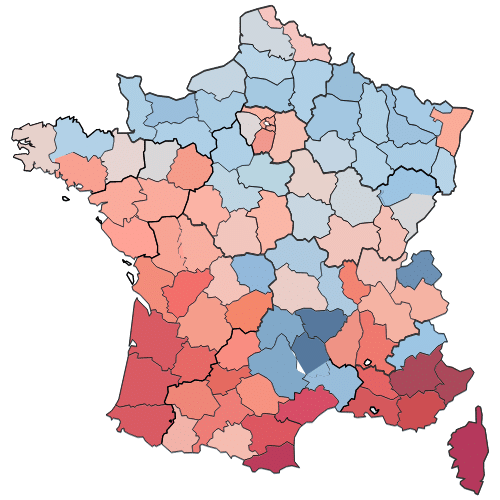
Blue alert: peak of intense heat over 1 or 2 days exceeding the threshold, or persistent episode of heat (more than 3 days) with temperatures close to the departmental threshold. These events present a health risk for workers overexposed to heat in environments such as dye works, laundries, kitchens, foundries, etc. Setting up mobile coolers near overexposed workers is a quick and effective solution.
Orange alert: heatwave lasting 3 consecutive days and nights, exceeding minimum and maximum thresholds. Here again, the quick and effective solution is a mobile adiabatic cooler for workers exposed to heat as a result of their physical activity, or the thermal environment at work.
Red alert: extreme heatwave. Exceptional heatwave in terms of duration and intensity, with aggravating factors having a major impact on the health of all types of employees, and leading to possible collateral effects in terms of business continuity.
A red alert automatically generates regulatory obligations. The employer must reassess the risks to workers on a daily basis, taking into account: changes in temperature during the day, the nature of the work, and the age and state of health of employees. Should the employer fail to comply, the employee may refer the matter to the Labour Inspectorate or the Social and Economic Committee, or exercise his or her right of withdrawal.
In the event of a red alert,employers need to react quickly. Air cooler rental is the answer to this problem. The higher the temperature, the more effective the cooler. In the event of a red alert, the cooler must have a sufficiently high airflow to maintain a comfortable temperature. In addition, several coolers can be rented to combat extreme heatwaves.
